California Blood Bank Society Annual Meeting 2022
California Blood Bank Society Annual Meeting 2022
Couldn't load pickup availability

California Blood Bank Society Annual Meeting 2022
California Blood Bank Society Annual Meeting 2022
- Include: 2 videos + 1 pdf, size: 6.36 GB
- Target Audience: hematologist
- Sample video: contact me for sample video
Information:
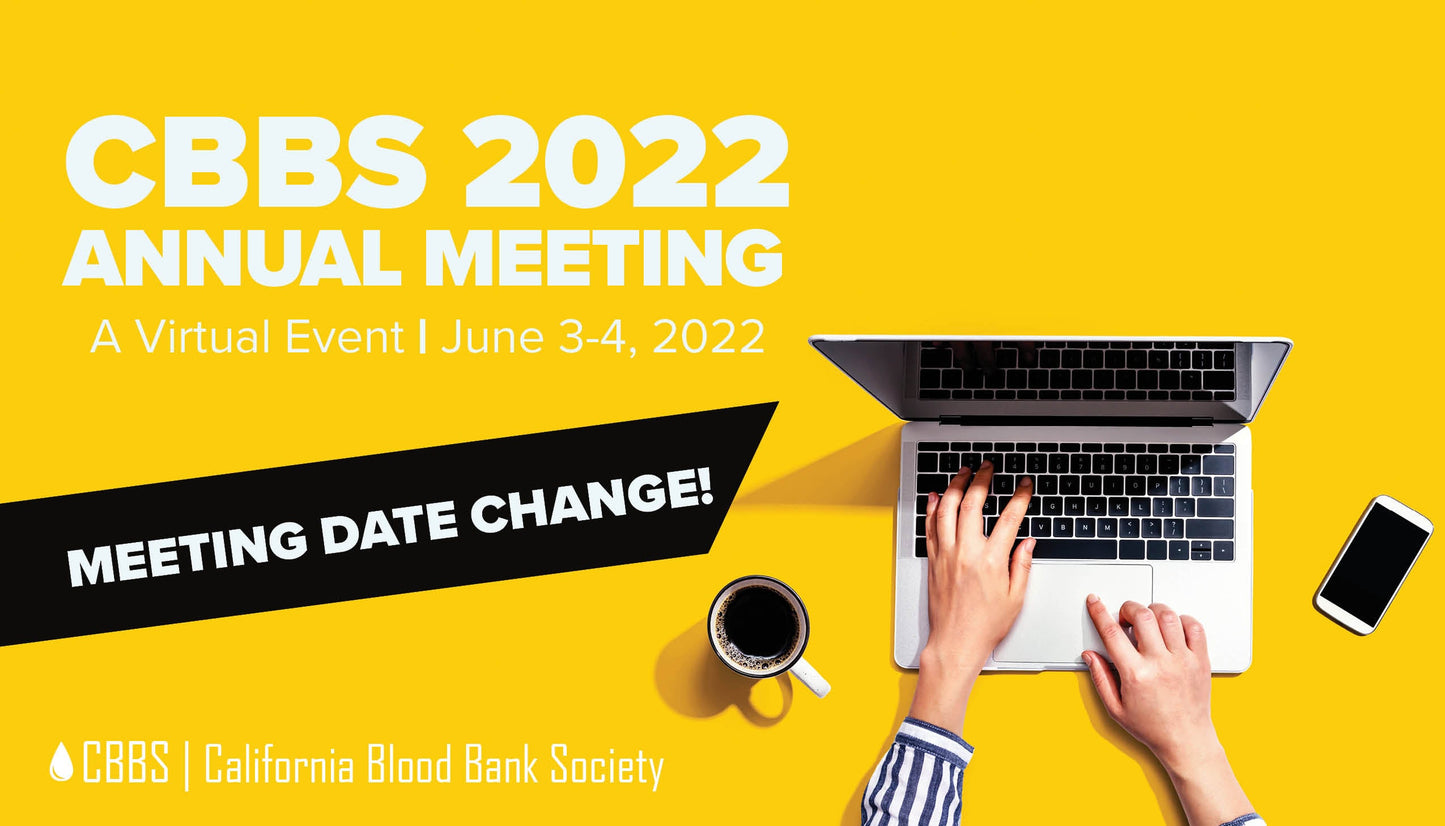
California Blood Bank Certainly! The California Blood Bank Society (CBBS) held its 2022 Annual Meeting as a virtual event on June 3-4, 2022. Here are the details:
- Agenda: The preliminary agenda included presentations from subject matter experts covering a wide range of topics in Transfusion Medicine and Cell Therapy. Some of the topics discussed were cold stored platelets, cellular therapy, pre-hospital transfusions, monoclonal antibody treatments, and transfusion medicine cases.
- Target Audience: Physicians, nurses, and laboratory professionals were the intended audience for this meeting.
Topics:
*Note: these are continuous video recordings during the conference, they include individual lectures mentioned in the Detail section below
CBBS-_Annual_Meeting_-_Agenda.pdf
June 3.mp4 (7 hours)
June 4.mp4 (6 hours)
*Detail:
JUNE 3, 2022
8:00 am – Welcome to 2022 CBBS Annual Meeting – CBBS President Suchitra Pandey*
8:05 am – Perkins-Garratty Award Lecture: Prospective Antigen Matching: Effectiveness, Diversity and Equity Dr. Meghan Delaney, DO, MPH
Objectives:
• Explain the impact of prophylactic antigen matching on new RBC alloimmunization in patients with warm autoantibodies.
• Compare different approaches for antigen matching for females and its impact on hemolytic disease of the fetus and newborn (HDFN).
• Relate how the diversity of the patient population may determine access to antigen-matched transfusions and HDFN care.
9:05 am – Cold-Stored Platelets: Current Use and Future Prospects – Dr. James R. Stubbs, MD
Objectives:
• Summarize the differences between cold-stored platelets and room-temperature platelets that should drive preferential use of these products in selected patient populations.
• Illustrate a current use of cold-stored platelets
• Appraise an ongoing research project that could potentially result in the expanded use of cold-stored platelets to benefit patient populations who are not currently receiving these components as part of their care.
10:02 am – Strategies to Maintain an Adequate Platelet Supply – Dr. Suchitra Pandey, MD
Objectives:
• Assess two reasons why the current state of the platelet supply is at risk of critical shortages.
• Examine two strategies to grow the donor pool and increase production of platelets.
10:40 am – Break*
10:45 am – For Here or To-Go? Discussing transfusion in transport. – Michael Baulch, RN, JD & Lee McMurray, MSN
Objectives:
• Examine transfusion needs of critical trauma and medical patients in transport.
• Analyze resuscitation options currently in practice, and their outcomes.
• Compare the benefits of blood component therapy versus whole blood transfusion during transport.
11:30 am – Leadership and Partnership During a National Blood Crisis: Getting Through the Crisis Together – Ross Herron, MD, Divisional Chief Medical Officer, American Red Cross Blood Services & Sarah Barnhard, MD FCAP FASCP, Associate Professor UC Davis
Objectives:
• Contrast three management and allocation strategies implemented by a blood supplier during the largest blood shortage in the past decade
• Summarize the crucial partnership between a hospital and their blood supplier to manage the blood shortage
• Describe the role blood center and hospital leadership played in addressing this national blood crisis.
12:00 pm – Meeting the Transfusion Needs of Patients With Sickle Cell Disease: It’s About Addressing Health Disparities and Access To Donation – Yvette Marie Miller, M.D., ABIHM, & Executive Medical Officer American Red Cross
Objectives:
• Choose at least two effective strategies to increase the recruitment of African American blood donors
• Summarize the important role donor recruitment plays in supporting transfusion needs of sickle cell patients.
12:30 pm – Lunch*
1:00 pm – Auto- vs. alloantibody in a patient with thalassemia – Ariela Edelman, MLS (ASCP)
Objectives:
• Outline the genetics of the Kidd blood group system
• Contrast how molecular methods can be used to distinguish between auto- vs. alloanti-Jka antibodies
• Summarize the limitations of multiple immunohematology testing methodologies
1:22pm – False anemia due to total parenteral nutrition and lipid emulsion contamination – Bethelhem Manakelew
Objectives:
• Analyze the potential for contamination when collecting blood samples.
• Evaluate one facility’s protocol for collecting uncontaminated blood samples.
• Determine the signs of false anemia due to lipid contamination
1:44pm – Therapeutic Response to Apheresis Aids Diagnosis of an Occult Malignancy – Dr. Hehua (Hannah) Huang, MD
Objectives:
• Identify a syndrome that can have several etiologies, including paraneoplastic processes.
• Outline paraneoplastic neurologic disorders (PND).
• Predict common applications of therapeutic apheresis.
2:06pm – Complex Antibody Identification Case Study – Rebecca (Becky) Thomas, MT (ASCP) SBB
Objectives:
• Explain the significance of testing phenotype-matched cells when all test cells are positive and the patient’s auto-control is negative.
• Differentiate two test methods used to facilitate identification of antibodies to high-incidence antigens.
• Appraise the monocyte monolayer assay (MMA).
2:30 pm – Business Meeting*
3:15 pm – Closing Remarks*
June 4, 2022
8:00 am – Welcome and Presentations of the Upton/Hemphill and Thomas Award*
8:15 am – Dr. Goldfinger Tribute – Samuel Pepkowitz, MD, and Louise Smith MPA, MT(ASCP)SBB
8:30 am – Dr. Dennis Goldfinger Award Lecture: Pearls of Wisdom from a Lifelong Fellowship/Friendship with Dr. Dennis Goldfinger – Dr. James Burner, MD
Objectives:
• Describe three clinical and laboratory findings in hyperhemolysis of sickle cell disease.
• Summarize the “two-hit” hypothesis of transfusion-related acute lung injury (TRALI).
• Analyze the potential risk of transfusion-transmitted cytomegalovirus (CMV)
9:15 am – Phasing in RHD Genotyping: Impact on Transfusion Practices – Sunitha Vege, MS
Objectives:
• Compare the different classifications of RHD alleles.
• Outline the strengths and limitations of current molecular methods utilized to identify RHD alleles.
• Conclude the impact of phasing in RHD genotyping on transfusion practices for patients with altered RHD alleles.
10:00 am – Monoclonal antibody interference in blood bank testing – Janet Baez, MT (ASCP)
Objectives:
• Identify two indications for monoclonal antibody therapy
• Examine monoclonal antibody interference in blood bank testing
• Formulate testing options available to resolve monoclonal antibody interference in blood bank testing
10:45 am – Break*
10:55 am – Susanne Ledin Award Lecture: Effective and Efficient Complex Serologic Antibody Identification (OR: Whoa, What Happens after the 3rd Panel?) – Sandra Nance, MS, MASCP, MT(ASCP)SBB
Objectives:
• Describe a complex antibody presentation that may require further investigation.
• Explain how the process of complex antibody identification can be optimized.
• Determine when a complex case resolution exceeds their laboratory’s ability to complete.
11:40 am – New Frontier in Cell Therapy – Dr. Mehrdad Abedi, MD
Objectives:
• Relate at least 2 different disease groups which can be treated with CAR-T cell therapy.
• Outline some of the potential complications of CAR-T cell therapy.
• Identify some of the potential side effects of gene therapy.
12:25 pm – Lunch*
1:05 pm – Polyclonal Regulatory T cell Manufacturing under cGMP: A Decade of Experiences – Dr. Joanna Balcerek, MD, PhD
Objectives:
• Break down key aspects of regulatory T cell manufacturing
• Explain how the quality of regulatory T cell products is assessed
• Compare the impact of independent variables on regulatory T cell manufacturing outcomes
1:35 pm – Ask the Experts – Various Speakers/experts – Moderated by scientific committee chairs
• Compare various opinions offered by expert speakers and resolve unanswered questions
2:35 pm – Closing Remarks*