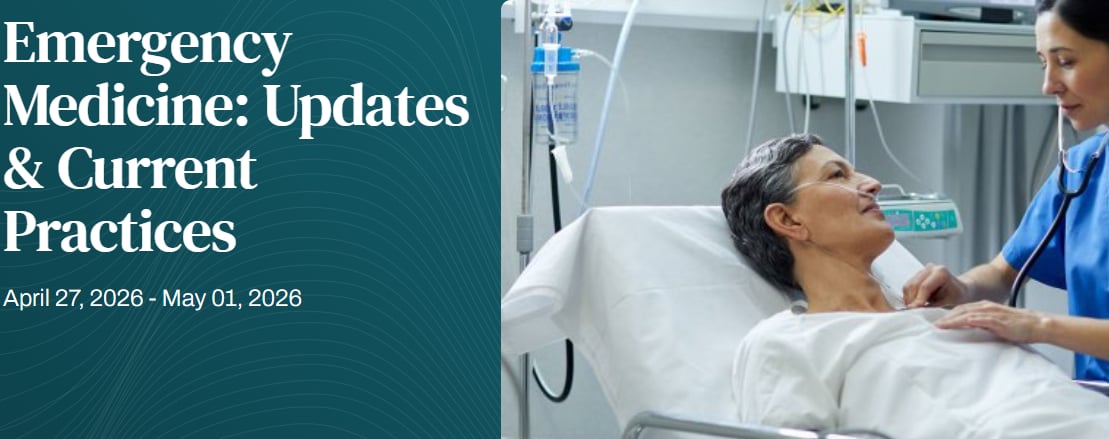
Harvard Emergency Medicine Updates & Current Practices 2026
Harvard Emergency Medicine Updates & Current Practices 2026
Couldn't load pickup availability

Harvard Emergency Medicine Updates & Current Practices 2026
Harvard Emergency Medicine Updates & Current Practices 2026
Course Overview
The Harvard Emergency Medicine Updates & Current Practices 2026 program delivers a comprehensive and clinically focused review of modern emergency medicine, emphasizing evidence-based emergency care, critical care management, point-of-care ultrasound, airway emergencies, resuscitation, and emergency department innovation.
Hosted by the Massachusetts General Hospital Department of Emergency Medicine, this intensive postgraduate course is designed to help emergency clinicians stay current with rapidly evolving emergency medicine guidelines, technologies, and clinical strategies. Through expert-led lectures, interactive case discussions, and practical emergency department scenarios, participants gain immediately applicable knowledge relevant to both academic and community emergency practice.
The curriculum integrates:
- Critical care emergencies
- Trauma management
- Emergency ultrasound (POCUS)
- Acute stroke care
- Septic shock
- Airway emergencies
- Emergency cardiology
- Pediatric emergency medicine
- Geriatric emergency care
- Health equity and operational medicine
- Artificial intelligence and informatics in the ED
The course also explores the future of emergency medicine through innovation, digital health, telemedicine, and workflow optimization strategies designed to improve both patient outcomes and emergency department efficiency.
Course Details
- Course: Harvard Emergency Medicine Updates & Current Practices 2026
- Course Dates: April 27 – May 1, 2026
- Format: 10 Videos + 43 PDFs
- Total Size: 10.52 GB
- Host Institution: Massachusetts General Hospital (MGH)
- Learning Format: Interactive livestream and recorded sessions
- Focus: Emergency Medicine, Critical Care & Emergency Department Practice
What You Will Learn
Participants will strengthen their expertise in:
- Recognition and management of tachydysrhythmias
- Cardiac arrest therapeutics and resuscitation updates
- Acute ischemic stroke protocols
- Pulmonary embolism and DVT management
- Emergency airway management
- Septic shock treatment strategies
- Vasopressor use in critical care
- ARDS management
- Emergency department POCUS applications
- Emergency ECG interpretation
- Trauma patient stabilization
- Emergency psychiatric evaluation
- Geriatric emergency medicine
- Pediatric emergency updates
- Postpartum hemorrhage management
- Burns and frostbite treatment
- High-altitude and wilderness medicine
- Clinical informatics and AI in emergency medicine
The course emphasizes practical emergency department decision-making and evidence-based patient care strategies.
Core Topics Covered
Emergency Airway & Critical Care
The course provides advanced updates in:
- Airway management
- Severe alcohol withdrawal
- Push-dose pressors
- ARDS
- Shock resuscitation
- Septic shock
- Ventricular fibrillation cardiac arrest
Participants review modern emergency stabilization strategies and critical care interventions relevant to high-acuity emergency settings.
Point-of-Care Ultrasound (POCUS)
Dedicated ultrasound sessions include:
- Cardiac POCUS
- Lung ultrasound
- eFAST examination
- Pediatric ultrasound
- Ultrasound-guided procedures
- IV and lumbar puncture guidance
The program emphasizes practical bedside ultrasound applications for rapid emergency diagnosis and management.
Cardiovascular Emergencies
Specialized emergency cardiology topics cover:
- ECG ischemia interpretation
- Pulmonary embolism
- Cardiac arrest updates
- Blood pressure monitoring
- Shock management
- Acute cardiovascular emergencies
Participants gain updated insight into emergency cardiovascular stabilization and resuscitation.
Neurologic & Stroke Emergencies
Neurologic emergency sessions explore:
- Acute ischemic stroke guidelines
- Mild head trauma
- Cranial nerve deficits
- Hemorrhagic stroke strategies
- Neurologic emergency evaluation
The curriculum focuses on timely diagnosis and evidence-based neurologic emergency care.
Pediatric & Geriatric Emergency Medicine
The program also addresses:
- Newborn fever management
- Bronchiolitis updates
- Pediatric emergency medicine literature
- Geriatric falls
- Frailty assessment
- Boarding impacts on elderly patients
Participants review age-specific approaches to emergency patient care.
Emergency Department Innovation & Operations
Modern emergency medicine topics include:
- Artificial intelligence in the ED
- Clinical informatics
- Tele-disaster medicine
- Emergency department patient experience
- Sustainability in healthcare
- Operational health equity
These sessions explore how innovation and systems-based strategies are transforming emergency medicine practice.
Trauma & Environmental Emergencies
Additional lectures cover:
- Burns management
- Compartment syndrome
- Hand injuries
- High-altitude illness
- Wilderness medicine
- Frostbite management
The course integrates trauma care with environmental and expedition-related emergency medicine.
Educational Features
Comprehensive Emergency Medicine Review
The curriculum combines:
- Emergency medicine updates
- Critical care education
- Trauma management
- Ultrasound training
- Case-based learning
- Practical emergency medicine pearls
The content is designed for direct clinical application in emergency department settings.
Harvard & MGH Faculty Expertise
Participants learn from experienced faculty specializing in:
- Emergency medicine
- Critical care
- Ultrasound
- Trauma
- Stroke care
- Pediatric emergency medicine
- Operational emergency medicine
Interactive Learning Experience
The course includes:
- Live-streamed lectures
- Q&A discussions
- Clinical case reviews
- Problem-solving sessions
- Recorded sessions for asynchronous learning
This flexible structure supports both live participation and on-demand review.
Broad Emergency Medicine Coverage
The curriculum spans:
- Resuscitation
- Trauma
- Pediatrics
- Geriatrics
- Cardiology
- Neurology
- Ultrasound
- Operations
- Public health
- Innovation
This multidisciplinary approach reflects the complexity of modern emergency medicine practice.
Target Audience
This course is ideal for:
- Emergency medicine physicians
- Critical care physicians
- Physician assistants
- Nurse practitioners
- Nurses
- EMTs and paramedics
- Specialty physicians
- Emergency medicine residents and fellows
It is especially valuable for clinicians seeking updated expertise in:
- emergency department critical care,
- POCUS,
- resuscitation,
- stroke management,
- and emergency medicine innovation.
Why This Course Matters
Emergency medicine continues to evolve rapidly with advances in resuscitation science, critical care, emergency ultrasound, stroke protocols, digital health technologies, and systems-based emergency care. Clinicians working in emergency settings must maintain broad diagnostic expertise while adapting to increasingly complex patient populations and operational demands.
The Harvard Emergency Medicine Updates & Current Practices 2026 course provides a clinically practical and evidence-based review of modern emergency medicine, integrating critical care updates, POCUS training, trauma management, operational innovation, and emergency department workflow optimization. Its broad multidisciplinary focus makes it highly relevant for emergency clinicians seeking immediately applicable strategies to improve patient care and emergency department performance.
Clinical Practice & Board Preparation Benefits
This program supports:
- Emergency medicine board preparation
- Critical care competency
- Ultrasound interpretation skills
- Emergency resuscitation training
- Clinical decision-making improvement
- Evidence-based emergency care
- Real-world emergency department management
The structured curriculum and wide clinical coverage make it valuable for both practicing emergency clinicians and physicians preparing for certification or recertification examinations.
Final Professional Summary
The Harvard Emergency Medicine Updates & Current Practices 2026 course offers advanced education in emergency medicine, critical care, POCUS, airway management, stroke care, trauma, sepsis, cardiac arrest, and emergency department innovation. Through expert-led lectures, interactive case discussions, and evidence-based clinical updates, the program provides emergency clinicians with practical strategies to improve emergency department care, resuscitation outcomes, and patient management across diverse emergency medicine scenarios.
Topics
-
00 Academic Emergency Medicine – 2026 – Southerland – Multi-Factorial and Multi-Component Fall Prevention Interventions
-
01 Echo in Pulmonary Embolism
-
02 Emergency Management of Burns
-
03 AI in the ED
-
04 Clinical Informatics in the ED
-
05 Geriatric Falls
-
06 Impact of Boarding on Geriatric Patients
-
07 Scrotal Pain in the ED
-
08 ARDS
-
09 Professionalism what does it really mean… and why do we care
-
10 Mild Head Trauma
-
11 Cardiac Arrest
-
12 Improving Emergency Department Patient Experience Principles and Practice
-
13 Innovation in Emergency Medicine Challenges and Opportunities
-
14 Tele-Disaster Medicine – From COVID to Ukraine
-
15 Current Practice in Newborn Fever
-
16 Airway Advances
-
17 POCUS Cardiac and Lung
-
18 POCUS E-FAST
-
19 POCUS – Procedures (IV, LP)
-
20 POCUS – Pediatric Cases
-
21 How to read ischemia on ECGs
-
22 Practice Updates in Acute PE
-
23 Critical Care Double Feature Push Dose Pressors in the ED and Severe Alcohol Withdrawal 1
-
23 Critical Care Double Feature Push Dose Pressors in the ED and Severe Alcohol Withdrawal 2
-
24 10 Things You Never Imagined About Monitoring Blood Pressure
-
25 Beyond “Medical Clearance” ED Evaluation of the Patient Presenting with Acute Psychiatric Complaints
-
26 Update on the treatment of ventricular fibrillation cardiac arrest
-
27 The 2026 Acute Ischemic Stroke Guidelines – Top 10 Take-homes for the Emergency Medicine Clinician
-
28 Cranial Nerve Deficits
-
29 Top Updates in PEM Literature AY 2025-2026
-
30 Recent Cardiologic Advances in EM
-
31 Vasopressors and Shock Pearls
-
32 On-field management of medical emergencies in the elite athlete take home lessons for your next shift
-
33 Hand Injuries How would You treat them; Case-Based Updates
-
34 STI
-
35 Wilderness Medicine High Altitude Equity is the Business of Emergency Medicine
-
36 Frostbite Management in the ED
-
37 Practical Sustainability Reducing Harm from Environmental Impacts of Healthcare
-
38 Management of Postpartum Hemorrhage
-
39 Current concepts in the management of septic shock
-
40 Ocular Emergencies
-
April 27 Afternoon Session
-
April 27 Morning Session
-
April 28 Afternoon Session
-
April 28 Morning Session
-
April 29 Afternoon Session
-
April 29 Morning Session
-
April 30 Afternoon Session
-
April 30 Morning Session
-
May 01 Afternoon Session
-
May 01 Morning Session