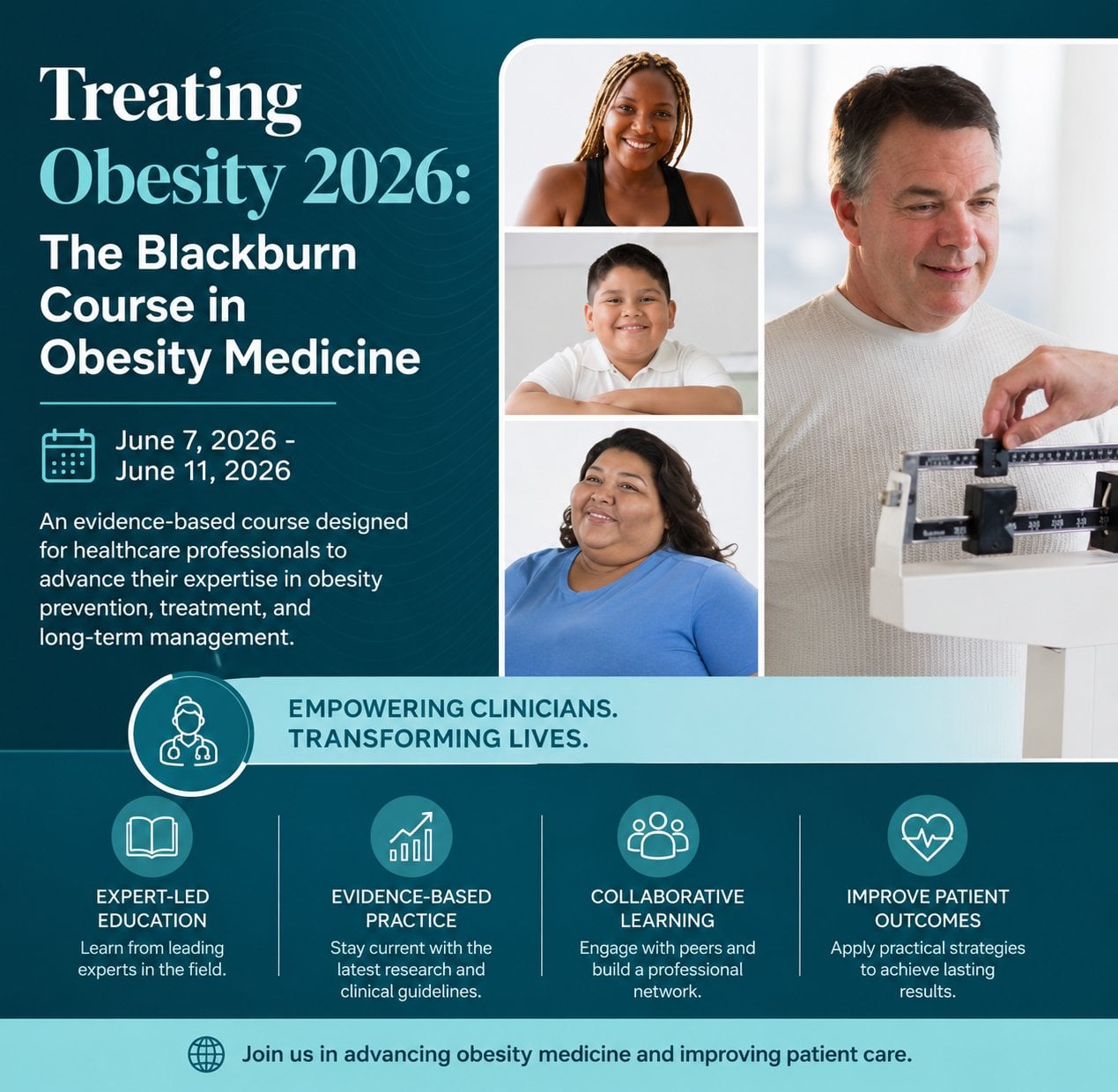
Harvard The Blackburn Course in Obesity Medicine 2026
Harvard The Blackburn Course in Obesity Medicine 2026
Couldn't load pickup availability

Harvard The Blackburn Course in Obesity Medicine 2026
Harvard The Blackburn Course in Obesity Medicine 2026 (Videos + PDFs)
Comprehensive Evidence-Based Strategies for Obesity Prevention, Medical Management, Bariatric Care, and Precision Medicine
Advance your expertise in obesity medicine with Harvard The Blackburn Course in Obesity Medicine 2026, one of the world's premier continuing medical education (CME) programs dedicated to the prevention, evaluation, and treatment of obesity across pediatric, adolescent, and adult populations. Developed by internationally recognized faculty from Harvard Medical School and leading obesity treatment centers, this comprehensive program delivers the latest evidence-based strategies for lifestyle intervention, pharmacotherapy, bariatric surgery, precision medicine, and multidisciplinary obesity care.
Held as an interactive online course utilizing live-streamed lectures, electronic Q&A sessions, and remote learning technologies, the Blackburn Course provides clinicians with practical tools to improve patient outcomes while addressing the complex biological, psychological, and social factors contributing to obesity. Participants will gain comprehensive knowledge of modern obesity management, including the rapidly evolving role of GLP-1 receptor agonists, combination pharmacotherapy, endoscopic therapies, bariatric surgery, pediatric obesity treatment, behavioral counseling, and emerging therapies for genetic obesity.
Whether preparing for the American Board of Obesity Medicine (ABOM) certification examination or seeking to enhance daily clinical practice, this course offers an exceptional multidisciplinary learning experience that bridges cutting-edge research with real-world patient care.
Product Details
- Course: Harvard The Blackburn Course in Obesity Medicine 2026
- Provider: Harvard Medical School
- Course Format: Videos + PDFs
- Learning Format: Online CME
- Language: English
- Educational Level: Intermediate to Advanced
Course Overview
Obesity has become one of the most significant global health challenges, contributing to cardiovascular disease, diabetes, fatty liver disease, cancer, sleep disorders, infertility, musculoskeletal disease, and numerous metabolic complications. Modern obesity management now extends far beyond calorie restriction, incorporating precision medicine, behavioral science, pharmacologic innovation, metabolic surgery, genetics, and multidisciplinary patient care.
Harvard The Blackburn Course in Obesity Medicine 2026 delivers a comprehensive review of the latest advances in obesity prevention and treatment. Participants learn how to evaluate complex patients, develop individualized treatment plans, integrate lifestyle modification with modern anti-obesity medications, determine appropriate candidates for bariatric surgery, and effectively manage obesity throughout the lifespan.
The curriculum also explores obesity-related bias, healthcare disparities, reimbursement strategies, virtual obesity care, communication skills, and practice development, creating a true 360-degree educational experience for clinicians working in obesity medicine.
Course Highlights
- Comprehensive obesity medicine update
- Latest GLP-1 receptor agonist therapies
- Precision medicine for obesity
- Lifestyle and behavioral interventions
- Pediatric and adolescent obesity
- Bariatric surgery evaluation
- Endoscopic obesity therapies
- Obesity pharmacotherapy
- Genetic obesity disorders
- Nutrition and dietary management
- Physical activity prescription
- Behavioral counseling techniques
- Obesity Medicine Board Review
- Practice management strategies
- Obesity bias and stigma
- Virtual obesity care
- Multidisciplinary obesity treatment
- Evidence-based clinical guidelines
What You'll Learn
After completing this course, participants will be able to:
- Perform comprehensive clinical evaluation of patients with obesity.
- Develop individualized obesity treatment plans using evidence-based strategies.
- Apply current lifestyle, nutritional, exercise, and behavioral interventions.
- Utilize modern anti-obesity medications, including GLP-1-based therapies.
- Identify patients who may benefit from bariatric or metabolic surgery.
- Evaluate indications for endoscopic obesity treatment options.
- Manage obesity-related metabolic complications using multidisciplinary approaches.
- Counsel patients using effective motivational interviewing and behavioral modification techniques.
- Recognize genetic and syndromic obesity disorders requiring specialized evaluation.
- Build successful obesity medicine programs in academic, hospital, and private practice settings.
Comprehensive Topics Covered
Modern Obesity Medicine
Review current concepts in obesity pathophysiology, metabolic dysfunction, body weight regulation, and evidence-based approaches to long-term obesity management.
GLP-1 and Emerging Pharmacotherapy
Explore the newest generation of GLP-1 receptor agonists, combination therapies, dual agonists, medication selection, monitoring strategies, adverse effect management, and future anti-obesity drug development.
Lifestyle Medicine
Develop comprehensive nutritional, behavioral, exercise, and lifestyle intervention strategies that support sustainable weight loss and long-term metabolic health.
Precision Medicine
Learn how individualized treatment approaches incorporating genetics, metabolic phenotyping, and personalized nutrition improve obesity management and patient outcomes.
Bariatric & Metabolic Surgery
Understand patient selection, surgical indications, operative options, postoperative care, nutritional monitoring, complication management, and long-term follow-up after bariatric procedures.
Pediatric & Adolescent Obesity
Review age-specific approaches to childhood and adolescent obesity, including behavioral therapy, pharmacologic treatment, family-centered care, and surgical interventions for severe obesity.
Genetic Obesity
Gain practical knowledge of inherited obesity syndromes, genetic testing, novel therapies, and individualized management strategies for rare obesity disorders.
Behavioral Counseling
Strengthen communication skills through motivational interviewing, behavioral modification techniques, patient engagement strategies, and long-term adherence planning.
Obesity Practice Management
Discover practical guidance for building successful obesity medicine services, including reimbursement, virtual care, multidisciplinary clinics, quality improvement, and healthcare policy.
ABOM Board Review
Prepare for the American Board of Obesity Medicine certification examination through comprehensive review of obesity pathophysiology, pharmacology, nutrition, surgery, genetics, pediatric obesity, and lifestyle medicine.
Learning Objectives
Upon completion of this educational activity, participants will be able to:
- Evaluate and manage patients with obesity using evidence-based clinical approaches.
- Implement individualized lifestyle interventions including nutrition, exercise, and behavioral therapy.
- Apply modern pharmacologic treatments for obesity, including GLP-1-based medications.
- Determine appropriate candidates for bariatric surgery and endoscopic interventions.
- Utilize multidisciplinary treatment strategies to improve long-term weight management outcomes.
- Recognize obesity-related complications and optimize comprehensive patient care.
- Improve communication while reducing obesity stigma and healthcare disparities.
- Integrate the latest obesity medicine guidelines into routine clinical practice.
Educational Features
- Harvard Medical School Faculty
- Expert Multidisciplinary Lectures
- Evidence-Based Clinical Updates
- Interactive Panel Discussions
- Case-Based Learning
- Practical Treatment Algorithms
- Obesity Medicine Board Review
- Lifestyle Medicine Education
- Pharmacotherapy Updates
- Bariatric Surgery Review
- Pediatric Obesity Management
- Precision Medicine Strategies
- On-Demand Videos and PDFs
Why This Course Stands Out
Unlike traditional endocrinology or nutrition conferences, Harvard The Blackburn Course in Obesity Medicine 2026 provides an integrated, multidisciplinary approach that addresses every aspect of obesity care—from prevention and behavioral counseling to advanced pharmacotherapy, metabolic surgery, pediatric obesity, and precision medicine. Participants benefit from instruction by internationally recognized experts while gaining practical tools that can immediately improve patient care across diverse clinical settings.
Its combination of evidence-based education, board examination preparation, real-world case discussions, and practice management strategies makes it one of the most comprehensive obesity medicine educational programs available.
Target Audience
This educational activity is ideal for:
- Internal Medicine Physicians
- Primary Care Physicians
- Bariatric Surgeons
- Endocrinologists
- Gastroenterologists
- Pediatricians
- Obesity Medicine Specialists
- Family Medicine Physicians
- Dietitians
- Nutrition Specialists
- Psychiatrists
- Psychologists
- Pharmacists
- Nurse Practitioners
- Physician Assistants
- Fellows and Residents
- Healthcare Professionals involved in obesity management
Why Choose This Course?
Whether you are preparing for ABOM certification, expanding an obesity medicine practice, or seeking the latest advances in pharmacotherapy, bariatric surgery, and lifestyle intervention, Harvard The Blackburn Course in Obesity Medicine 2026 provides a comprehensive, evidence-based educational experience designed to improve clinical decision-making and optimize long-term patient outcomes. Through expert instruction, multidisciplinary collaboration, and practical clinical guidance, this program equips healthcare professionals with the knowledge and skills needed to successfully manage obesity across every stage of life.
4. Topics
Sunday, June 7, 2026
Board Review Schedule
All times listed in Eastern Time. Live Streaming
Board Review Session 1 |
|
|
Welcome and Introduction Drs. Amandeep Singh and Angela Fitch
|
9:00-9:10 am
|
|
Approach to the Patient with Obesity Dr. Chika Anekwe
|
9:10-9:40 am
|
|
Nutritional Assessment and Therapy Dr. Gregory Curtis
|
9:40-10:10 am
|
|
Cardiorespiratory Fitness and Exercise Dr. Jennifer Mulligan
|
10:10-10:40 am
|
|
Panel Discussion / Q&A Drs. Anekwe, Curtis, Mulligan, and Fitch
|
10:40-11:10 am
|
| Break | 11:10-11:40 am |
Board Review Session 2 |
|
|
Practicing Obesity Medicine with Professionalism Dr. Amanda Powell
|
11:40 am-12:10 pm
|
|
Pediatrics 1: Patient Assessment Dr. Vibha Singhal
|
12:10-12:40 pm
|
|
Pediatrics 2: Patient Management Dr. Jennifer Rosenblum
|
12:40-1:10 pm
|
|
Lightning Round 1 Dr. Wesley Dutton
|
1:10-1:40 pm
|
|
Panel Discussion / Q&A Drs. Powell, Singhal, Rosenblum, Dutton, and Fitch
|
1:40-2:10 pm
|
| Break | 2:10-2:30 pm |
Board Review Session 3 |
|
|
Pharmacotherapy Dr. Mehmet Burak
|
2:30-3:00 pm
|
|
Bariatric Endoscopy Dr. Amandeep Singh
|
3:00-3:30 pm
|
|
Bariatric Surgery Dr. Karan Chhabra
|
3:30-4:00 pm
|
|
Panel Discussion / Q&A Drs. Burak, Singh, Chhabra, and Fitch
|
4:00-4:30 pm
|
| Break | 4:30-4:50 pm |
Board Review Session 4 |
|
|
Behavioral Assessment and Therapy Dr. Mark Gorman
|
4:50-5:20 pm
|
|
Genetic and Syndromic Obesity Dr. Angela Fitch
|
5:20-5:50 pm
|
|
Obesity Comorbidities Dr. Wesley Dutton
|
5:50-6:20 pm
|
|
Lightning Round 2 Dr. Sreevidya Bodepudi
|
6:20-6:50 pm
|
|
Panel Discussion / Q&A Drs. Gorman, Fitch, Dutton, and Bodepudi
|
6:50-7:20 pm
|
Supplementary Board Review Sessions (Pre-recorded for self-paced study) |
|
Pathophysiology of Obesity 1 Dr. Angela Fitch
|
|
Pathophysiology of Obesity 2 Dr. Paul Copeland
|
|
Pathophysiology of Obesity 3 Dr. Angela Fitch
|
Monday, June 8, 2026
Welcome and Introduction
2026 Blackburn Lecture: State of Obesity in 2026
Roundtable Discussion with Keynote Speaker
Clinical Approach to the Patient with Obesity
Body Composition
Panel Discussion: Approach to Treatment
Obesity Pharmacotherapy
Pharmacodynamics and Medication Dosing in the Patient with Obesity
Panel Discussion: Pharmacotherapy
Staging, Assessment and Treatment of Obesity
Patient-Centric Treatment of Obesity
Complex Genetic Obesity Syndromes
Patient Case Presentations Highlighting Delivery of Care 1
Patient Case Presentations Highlighting Delivery of Care 2
Patient Case Presentations Highlighting Delivery of Care 3
Tuesday, June 9, 2026
Key Exercise Recommendations for Weight Loss and Maintenance
Time-Restricted Eating
Dietary Strategies for Weight Loss
Culinary Medicine Programs
Panel Discussion: Dietary Considerations
The New Fundamentals of Obesity Care
Genetics and the Future of Obesity Treatment
Lipodistrophy
Panel Discussion: Individualization of Care
Precision Medical Treatment of Obesity
Precision Lifestyle Treatments for Obesity
The Future State of Obesity Care
Patient Case Presentations Highlighting Precision Delivery of Care
Panel Discussion: Precision Care
Circadian Influences and Lifestyle Interventions
Tailoring Obesity Care Based on Genetic Differences
Using Technology to Deliver Personalized Metabolic Care
Wednesday, June 10, 2026
Cooperative Integrated and Virtual Care Models
Delivering Effective Obesity Care in Private Practice
Integrating Primary Care and Obesity Medicine in an Academic Medical Center
Group Visit Models
Panel Discussion: Models of Delivering Care
Assessment of the Pediatric Patient with Obesity
Use of Anti-Obesity Medications in Pediatric Patients
Bariatric Endoscopy and Surgery in the Pediatric Patient
Panel Discussion: Obesity in the Pediatric Population
Update on Bariatric Surgery
Panel Discussion: Endoscopic and Surgical Approaches to Treating Obesity
Providing Virtual Obesity Care
Optimizing Obesity Care in Private Practice: Strategies for Success
Advancing Obesity Care in Academic Medicine: Challenges and Opportunities
Thursday, June 11, 2026
Addressing Healthcare Disparities in Obesity Treatment
Stigma and Bias in Treating Obesity
Panel Discussion: Disparities and Stigma
The Unbearable Lightness of Weight and Age
The Intersection of Metabolic Disease and Mental Health
Obesity and Cardiovascular Disease
Sleep Health and Sleep Apnea
Obesity and Cancer
Obesity and Diabetes
Panel Discussion: Diseases
Caring for All Patients
Equity in Obesity Care
Diagnosis and Staging of MAFLD/MASH