Skip to product information

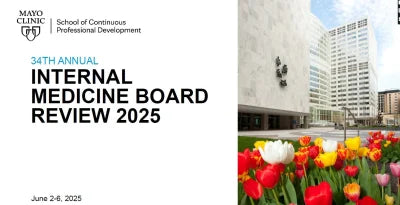
Mayo Clinic 34th Annual Internal Medicine Board Review 2025 (Videos+Slides)

Mayo Clinic 34th Annual Internal Medicine Board Review 2025 (Videos+Slides)

Regular price $60.00 USD
Regular price $60.00 USD Sale price
SAVE Liquid error (snippets/price line 116): Computation results in '-Infinity'% Sold out
mayo-clinic-34th-annual-internal-medicine-board-review-2025

Mayo Clinic 34th Annual Internal Medicine Board Review 2025 (Videos+Slides)

Regular price $60.00
Regular price $60.00 Sale price
SAVE Liquid error (snippets/price line 116): Computation results in '-Infinity'% Sold out
  • Share positive thoughts and feedback from your customer.

    Author
  • Share positive thoughts and feedback from your customer.

    Author
  • Share positive thoughts and feedback from your customer.

    Author
    View full details


    The 34th Annual Mayo Clinic Internal Medicine Board Review (IMBR) is a high-yield, intensive course designed to assist with the American Board of Internal Medicine (ABIM) Initial and Maintenance of Certification Examinations and to provide a relevant review for daily practice. Learners gain access to excellent Mayo Clinic faculty, unparalleled content and techniques proven to enhance learning and recall.

    Videos+Slides +PDFS

    Schedule : June 2 – 6, 2025 – Central Tim

    Target Audience


    This course is designed for internal medicine physicians who are:
    • Intending to obtain a thorough review in internal medicine
    • Completing their maintenance of certification knowledge modules
    • Taking the initial ABIM certification examination
    • Taking the ABIM maintenance of certification examination

    Learning Objectives


    Upon completion of this activity, participants should be able to:

    Identify topics and content areas for personal growth to tailor self-study
    • Recall clinical presentation of conditions critical to the practice of internal medicine and its subspecialties
    • Select next best steps in the evaluation, diagnosis and management of common and life-threatening conditions
    • Apply evidence-based medicine principles to answer statistical and clinical questions
    • Implement best current evidence-based practices into patient care
    34th Annual Internal Medicine Board Review
    Hilton Rochester Mayo Clinic Area Hotel


    Monday, June 2, 2025
    6:00 a.m. Registration / Breakfast / Exhibits
    7:00 a.m. Welcome and Course Overview
    April R. Christensen, M.D., M.S. and David Raslau, M.D., M.P.H.
    7:10 a.m. GeriatricsMaria D. Mendoza de la Garza, M.D.
    • Recall evidence-based fall prevention strategies and use this information to effectively manage patients
    • Diagnose and manage patients with mild cognitive impairment and dementia in the elderly
    • Evaluate and manage urinary incontinence in the elderly
    • Recognize high-risk medications in elderly patients and develop strategies for preventing medication related side effects
    • Prevent and manage pressure injury in the elderly
    8:00 a.m. DermatologySindhuja Sominidi Damodaran, M.B.B.S., M.D.
    • Diagnose and manage basal and squamous cell carcinoma
    • Diagnose and develop initial management strategies for melanoma
    • Identify the diagnosis and management of common primary care skin conditions, such as vitiligo, pityriasis rosea, rosacea, and scabies
    • Recognize and manage acne vulgaris
    • Recognize and treat psoriasis
    • Recognize and treat drug eruptions
    8:40 a.m. AllergyGerald W. Volcheck, M.D.
    • Recognize and treat anaphylaxis
    • Diagnose and treat urticaria and angioedema
    • Diagnose and treat allergic rhinosinusitis
    9:35 a.m. Break and Exhibits
    9:55 a.m. Nutrition/Nutritional DisordersKalpana Muthusamy, M.B.B.S., M.D.
    • Identify overweight and obese patients and identify their health risks
    • Review medical and surgical management of obesity
    • Recognize and manage dietary factors in hypertension
    • Recognize nutrition deficiencies
    10:40 a.m. HEENTMelissa H. Bogin, M.D.
    • Evaluate and manage epistaxis
    • Identify the presentation, evaluation, and management of glaucoma
    • Diagnose and treat infectious pharyngitis
    • Develop initial evaluation and management strategies for the acute red eye
    • Diagnose and treat acute and chronic infectious sinusitis
    11:20 a.m. Lunch and Exhibits
    12:05 p.m. Men’s HealthJason H. Szostek, M.D.
    • Identify the screening strategies, diagnosis, and management of prostate cancer
    • Describe an approach to diagnosing & treating benign prostatic hypertrophy (BPH)
    • Recall the evaluation, diagnosis, and initial management strategies for erectile dysfunction
    12:55 p.m. Women’s Health: Adolescence and BeyondJill M. Huber, M.D.  
    • Outline the principles of contraception and contraceptive counseling
    • Review the management of common medical conditions in pregnancy
    • Recall the evaluation of abnormal uterine bleeding
    • Outline the risks, benefits, and indications for hormone replacement therapy in women
    1:50 p.m. 

     
    Hypertension and HyperlipidemiaJoel D. Beachey, M.D.  
    • Apply lipid lowering treatment based on patient characteristics/risk utilizing AHA/ACC

    guidelines
    • Identify, diagnose, and manage hypertension based on consideration of medical

    comorbidities
    2:35 p.m. Break and Exhibits
    2:50 p.m. PsychiatryWilliam B. Leasure, M.D.
    • Review diagnosis and treatment of depression
    • Recall the diagnosis and treatment of anxiety spectrum disorders
    • Recognize the presentation and management of substance use disorder
    • Diagnose and manage schizophrenia, including medication side effects
    • Identify and treat bipolar disorder
    3:40 p.m. Neurology  Rafid Mustafa, M.D.
    • Diagnose and manage basic seizure disorders
    • Compare and contrast headache types and management strategies
    • Evaluate for and treat etiologies of stroke
    • Identify, diagnose, and manage radiculopathies and spinal stenosis
    • Recognize the presentation of and select appropriate testing for patients with restless leg syndrome
    • Diagnose and treat common peripheral neuropathies
    • Diagnose and treat movement disorders including essential tremor and Parkinson’s
    • Diagnose and select appropriate treatment for patients with myasthenia gravis
    4:50 p.m. Sprint Test
    5:20 p.m. Adjourn

    Tuesday, June 3, 2025
    6:00 a.m. Registration / Breakfast / Exhibits
    7:00 a.m. Endocrinology – Diabetes Part 1Pankaj Shah, M.D.
    • Diagnose and manage Type 1 and gestational diabetes mellitus
    • Diagnose and manage Type 2 diabetes mellitus
    • Identify strategies to prevent or delay the onset of Type 2 diabetes mellitus
    7:50 a.m. Endocrinology – Diabetes and Hypoglycemia Part 2Pankaj Shah, M.D.
    • Diagnose and manage diabetic ketoacidosis
    • Diagnose and manage diabetic hyperosmolar nonketotic state
    • Diagnose and manage hypoglycemia in the diabetic patient
    8:30 a.m.   Endocrinology – Bone and ParathyroidKurt A. Kennel, M.D.  
    • Use risk factors to diagnose and manage male and female osteoporosis
    • Distinguish osteomalacia from osteoporosis by listing its distinct clinical features
    • List key aspects of the diagnosis, evaluation, and treatment decisions in Paget disease of the bone
    • Recall the evaluation and management of primary hyperparathyroidism
    • Employ a stepwise approach to evaluate and treat hypercalcemia and hypocalcemia
    9:25 a.m. Break and Exhibits
    9:40 a.m. Endocrinology – ThyroidKharisa N. Rachmasari, M.D.
    • Evaluate and manage hyperthyroidism and hypothyroidism, including subclinical disease
    • Diagnose and manage thyroid medical emergencies
    • Evaluate and manage thyroid nodules
    • Describe and manage the different types of thyroid cancer
    10:30 a.m. Endocrinology – Pituitary, Gonadal, and Adrenal Disorders
    Lucinda Gruber, M.D.
    • Evaluate and manage the adrenal incidentaloma
    • Diagnose and manage Cushing’s Syndrome and adrenal insufficiency
    • Select appropriate evaluation and management strategies of pituitary tumors
    • Identify the appropriate evaluation of secondary amenorrhea
    • Identify the appropriate evaluation and management of male hypogonadism

    11:15 a.m.


    Rheumatology – Vasculitis
    Matthew J. Koster, M.D.
    • Recognize the various forms of vasculitis
    • Identify initial treatment strategies for vasculitis

    12:05 p.m.Lunch and Exhibits12:50 p.m.


    Rheumatology – Gout and Spondyloarthropathies
    Kerry Wright, M.B.B.S. 
    • List common causes of foot and ankle pain and their treatments
    • Diagnose and treat crystalline induced disease
    • Identify the diagnosis and treatment of spondyloarthropathies

    1:45 p.m.


    Rheumatology – Arthritis
    Can M. Sungur, M.D., Ph.D. 
    • Diagnose and treat fibromyalgia
    • Utilize physical exam and laboratory studies to diagnose and manage rheumatoid arthritis
    • Diagnose and manage symptomatic osteoarthritis

    2:45 p.m.


    Rheumatology – Systemic Lupus Erythematosus and Anti-Phospholipid Antibody Syndrome
    Uma Thanarajasingam, M.D., Ph.D. 
    • Diagnose and develop initial management of systemic lupus erythematosus (SLE)
    • Review complications of SLE
    • Assess and manage antiphospholipid antibody syndrome

    3:35 p.m.Break and Exhibits3:50 p.m.


    Rheumatology – Raynaud’s, Systemic Sclerosis, Inflammatory Myopathies, and Sjogren’s Syndrome
    Alicia M. Hinze, M.D.
    • Diagnose and manage secondary Raynaud phenomenon
    • Recognize the clinical signs and symptoms of systemic sclerosis (scleroderma), inflammatory myopathies, and Sjogren’s disease
    • Obtain appropriate diagnostic studies for evaluation of systemic sclerosis, inflammatory myopathies, or Sjogren’s Disease and interpret the results

    4:30 p.m.


    Critical Care
    Jeremy M. Clain, M.D.
    • Recall the diagnosis and management of hypovolemic, distributive, cardiogenic shock

    and tamponade
    • Recall the etiology and pathophysiology of respiratory failure and select appropriate

    testing and management strategies
    • Select appropriate tests and management strategies for sepsis based on

    pathophysiology
    • Diagnose and manage transfusion-related reactions

    5:15 p.m.


    Sprint Test5:35 p.m.Adjourn

    Wednesday, June 4, 2025
    6:00 a.m. Registration / Breakfast / Exhibits
    7:00 a.m. Cardiology – Heart Failure and Pericardial DiseaseMichael W. Cullen, M.D.  
    • Discuss the diagnosis and evaluation of heart failure with reduced ejection fraction

    and heart failure with preserved ejection fraction
    • Manage acute and chronic heart failure with lifestyle, pharmacological, and device

    Therapies
    • Diagnose, classify, and manage common cardiomyopathies
    • Recognize the presentation and select appropriate management for patients with

    pericardial disease, including acute pericarditis, constrictive pericarditis, and cardiac

    tamponade
    8:05 a.m. Cardiology – Coronary Artery Disease  Benjamin D. Nordhues, M.D.
    • Determine appropriate method for evaluating for coronary artery disease based on pre-test probability of disease
    • Evaluate and manage perioperative testing and medications in patients with known, or at risk for CVD
    • Select appropriate management of an acute myocardial infarction, including management of NSTEMI
    • Recognize Right Ventricular Infarction and select appropriate management strategies
    • Select the appropriate timing of elective operations in patients after coronary stenting
    8:55 a.m. Break and Exhibits
    9:10 a.m. Cardiology – ECG’s, Atrial Fibrillation, and Other ArrhythmiasAbhishek J. Deshmukh, M.B.B.S.
    • Use the fundamentals of EKG to recognize common arrhythmias
    • Design appropriate evaluation and management strategies for patients with atrial

    fibrillation
    • Recognize and manage common arrythmias (excluding a fib)
    • Assess the risks and benefits of anti-coagulation therapies to design appropriate

    management strategies
    9:55 a.m. Cardiology – Valvular DiseaseJeffrey B. Geske, M.D.  
    • Identify risk factors for and presentation of congenital valve abnormalities, and

    choose appropriate management
    • Outline risk factors for and recall the diagnosis and presentation of management

    aortic stenosis and hypertrophic cardiomyopathy
    • Recognize the pathophysiology and presentation of mitral stenosis, select

    appropriate testing, and interpret the findings accurately
    • Delineate risk factors for and recall the diagnosis and management of aortic

    regurgitation, mitral regurgitation, and tricuspid regurgitation
    10:45 a.m. Cardiology – Vascular DiseaseRobert D. McBane II, M.D. 
    • Identify the initial method for evaluating and managing peripheral vascular disease
    • Describe the risk factors for, and the evaluation and management of aortic dissection
    • Describe the risk factors for, and the evaluation and management of aortic aneurysm
    11:35 a.m. Lunch and Exhibits
    12:20 p.m  Pulmonary – COPD, Asthma, and OSAKara L. Dupuy-McCauley, M.D.
    • Recall the differential diagnosis and management of pneumothorax
    • Describe the classification schemes for asthma and use this information to effectively

    diagnose and manage patients
    • Recognize features of obstructive sleep apnea and select appropriate testing for

    diagnosis

    Recall the diagnosis and management of chronic obstructive pulmonary disease
    1:00 p.m. Pulmonary – Pulmonary TestsAshley M. Egan, M.D.  
    • Use an algorithm to correctly interpret spirometry and direct management
    • Recall diseases with a restrictive, obstructive, or mixed picture on spirometry
    • Evaluate and interpret pleural fluid tests
    1:45 p.m. Pulmonary – ILD, Pulmonary HypertensionCassandra M. Braun, M.D.
    • Identify and recall the different causes of diffuse alveolar hemorrhage
    • Identify the cause and select treatment for interstitial lung disease
    • Describe the causes, presentation, and basic treatment of pulmonary hypertension
    2:25 p.m. Oncology – Breast/GynecologySusan N. Kok, M.D.
    • Identify appropriate breast cancer screening techniques for women
    • Describe the diagnostic evaluation of findings worrisome for breast cancer
    • Recall the adjuvant treatments indicated to reduce breast cancer recurrence
    • Identify risk factors for cervical cancer and know appropriate screening and

    management principles
    • Identify the presentation of uterine cancer and review basic management principles
    • Identify risk factors and know basic management principles of ovarian cancer
    3:15 p.m. Break and Exhibits
    3:30 p.m. Oncology – PulmonaryKonstantinos Leventakos, M.D.
    • Evaluate and manage a solitary pulmonary nodule
    • Identify the most common forms of lung cancer, their staging, and respective

    treatments
    • Integrate smoking cessation options into treatment plans
    • Diagnose paraneoplastic syndromes associated with lung cancer
    • Identify risk factors for lung cancer
    • Recognize indications for lung cancer screening
    • Recall the clinical presentation and diagnosis of lung cancer
    4:15 p.m. Oncology – Gastrointestinal CancersHao Xie, M.D., Ph.D.
    • Stage and treat colon cancer (screening covered separately)
    • Diagnose and stage pancreatic cancer
    • Evaluate and diagnose esophageal cancer
    • Diagnose and treat gastric cancer, including MALT lymphoma
    5:00 p.m. Sprint Test
    5:20 p.m. Adjourn

    Thursday, June 5, 2025
    6:00 a.m. Registration / Breakfast / Exhibits
    7:00 a.m. Gastroenterology – Esophageal and GastricKarthik Ravi, M.D.
    • Recognize common clinical situations requiring endoscopic evaluation
    • Recall the diagnosis, management, and complications of gastroesophageal reflux

    disease
    • Diagnose and manage candida esophagitis
    • Diagnose and manage gastric polyps
    • Diagnose and manage Helicobacter pylori infection
    • Diagnose and manage peptic ulcer disease
    8:00 a.m. Gastroenterology – Hepatology, Gall Bladder, and BiliaryWilliam Sanchez, M.D.
    • Interpret abnormal liver function tests to diagnose common patterns of liver injury
    • Identify risk factors and appropriate screening intervals for hepatocellular carcinoma
    • Diagnose and manage major complications of chronic liver disease (e.g. Ascites,

    variceal bleeding and hepatocellular carcinoma)
    • Diagnose and manage Hepatitis A, B and C infections
    • Interpret ascites fluid chemistries
    • Diagnose and manage common biliary disease
    8:55 a.m. Break and Exhibits
    9:10 a.m. Gastroenterology – Small BowelSeth R. Sweetser, M.D.
    • Evaluate non-variceal GI bleeding
    • Evaluate and manage acute and chronic diarrhea
    • Diagnose and manage celiac disease
    • Diagnose and manage bowel ischemia, including colon ischemia
    10:20 a.m. Gastroenterology – Colon and PancreasXiao Jing (Iris) Wang, M.D.
    • Recall when to initiate colon cancer screening given patient and family history
    • Identify the appropriate management and follow up of colon polyps
    • Recognize the cause, diagnosis, and management of acute pancreatitis
    • Select appropriate management options for the patient with inflammatory bowel disease
    11:15 a.m. Infectious Diseases – Endocarditis and CNS InfectionsMatthew J. Thoendel, M.D., Ph.D.
    • Review the indications for and management of infective endocarditis (IE) prophylaxis
    • Review the evaluation, diagnosis, and treatment of infective endocarditis
    • Diagnose and treat bacterial meningitis
    • Identify the diagnosis and management of viral meningitis/encephalitis
    12:05 p.m. Lunch and Exhibits
    12:50 p.m. Infectious Diseases – Pneumonia and TravelMadiha Fida, M.B.B.S.
    • Identify the diagnosis and management of community acquired pneumonia in the outpatient and inpatient setting
    • Diagnose and treat hospital-acquired pneumonia
    • Identify infectious control strategy for hospitalized patients
    • Review indications for prophylactic antimicrobials in international travel
    1:30 p.m. Infectious Diseases – HIV/TBMary J. Kasten, M.D.  
    • Review appropriate screening, diagnosis, and initial management of HIV/AIDS
    • Review prophylaxis and screening for opportunistic cancers and infections during HIV infection
    • Diagnose and treat tuberculosis
    • Identify the most common adverse reactions with tuberculosis treatment
    2:30 p.m. Break and Exhibits
    2:45 p.m. Infectious Diseases – GI and GUMac Chesdachai, M.D.  
    • Identify the differences in treating non- severe, severe, and recurrent Clostridium difficile infection
    • Screen for and treat localized and systemic STI
    • Diagnosis and manage patients with urinary tract infections
    3:15 p.m. Infectious Diseases – Vaccine-Preventable Diseases and ZoonosessMac Chesdachai, M.D.
    • Identify the indications for varicella-zoster testing, vaccination and treatment
    • Select vaccines that can be safely given in pregnancy
    • Prevent and treat measles
    • Identify, diagnose, and manage toxoplasmosis
    • Diagnose and manage complications of rheumatic fever
    • Review evaluation and management of common tick-borne diseases
    • Review evaluation and management of common fungal infections throughout the US
    4:00 p.m. Infectious Diseases – Skin and Bone Infections Hussam Tabaja, M.D. 
    • Identify pathogen specific treatment of skin and soft tissue infections
    • Identify, diagnose, and treat lower extremity cellulitis, and gas gangrene
    • Discuss prophylactic antimicrobial therapy in patients with prosthetic joints
    • Diagnose and treat osteomyelitis
    • Diagnose and treat septic bursitis
    4:55 p.m. Sprint Test
    5:15 p.m. Adjourn

    Friday, June 6, 2025
    6:00 a.m. Registration / Breakfast / Exhibits
    7:00 a.m. Hematology – Abnormal CBCCarrie A. Thompson, M.D.
    • Summarize the evaluation of abnormal red blood cell counts
    • Describe the evaluation of abnormal white blood cell count
    • Identify and evaluate pancytopenia
    • Review the evaluation of elevated platelet counts
    • Recall the diagnosis and treatment of thrombotic thrombocytopenic purpura (TTP)
    7:45 a.m. Hematology – Lymphoid MalignanciesCarrie A. Thompson, M.D.
    • Recall the evaluation and initial management of chronic lymphoproliferative disorders
    • Describe the differences between HL and NHL with respect to diagnosis and treatment
    • Diagnose and treat acute lymphocytic leukemia
    8:25 a.m. Hematology – Plasma Cell DisordersMustaqeem A. Siddiqui, M.D., M.B.A.
    • Recall the clinical presentation, diagnosis, and management of amyloidosis
    • Recognize the presentation of and select management strategies for patients with Waldenstrom macroglobulinemia
    • Compare and contrast monoclonal gammopathy of undetermined significance (MGUS), smoldering myeloma and multiple myeloma according to presentation, evaluation, and management

     
    9:10 a.m. Break and Exhibits
    9:25 a.m. Hematology – Myeloid MalignanciesMithun V. Shah, M.D.
    • Recall the presentation, diagnosis, and management of myelodysplastic neoplasms
    • Identify the presentation, diagnosis, and management of myeloproliferative neoplasms
    • Diagnose and treat acute myeloid leukemia
    • Diagnose and manage acute blast crisis
    10:25 a.m. Hematology – Bleeding and CoagulationMeera Sridharan, M.D., Ph.D.
    • Recall the diagnosis and management of congenital and acquired bleeding disorders
    • Identify and manage coagulation factor deficiencies and dysfunction
    • Evaluate and manage thrombocytopenia
    • Recall the evaluation and management of superficial and deep venous thrombosis
    • Diagnose and manage pulmonary embolism
    • Diagnose and manage heparin-induced thrombocytopenia (HIT)
    11:25 a.m. Lunch and Exhibits
    12:10 p.m. Nephrology – Electrolyte and Acid-base Cases       Ladan Zand, M.D.
    • Recall the diagnosis and management of inappropriate antidiuretic hormone secretion (SIADH)
    • Identify, evaluate, and manage hypo- and hypernatremia
    • List appropriate treatment strategies for hypo- and hyperkalemia
    • Apply an algorithm to diagnose acid-base disorders
    1:35 p.m. Break and Exhibits
    1:50 p.m. Nephrology –Nephrolithiasis and Acute Kidney Injury Part 1Michael A. Mao, M.D.
    • Describe the diagnosis and evaluation of acute renal injury
    • Define indications for acute dialysis
    • Manage pre and post renal injury
    • Diagnose and manage nephrolithiasis
    • Diagnose and manage acute tubular necrosis
    2:35 p.m. Nephrology – Acute Kidney Injury Part 2Michael A. Mao, M.D.
    • Identify indications for renal biopsy
    • Diagnose and manage acute interstitial nephritis
    • Describe the diagnosis, evaluation, and management of glomerular disorders
    • Prevent, recognize, and manage contrast-induced nephropathy
    3:20 p.m. Nephrology – Chronic Kidney DiseaseVirginia (Ginny) A. Dines, M.D.
    • Identify risk factors and recognize the presentation of nephrogenic systemic fibrosis
    • Identify causes of chronic kidney disease and strategies to prevent progression of chronic kidney disease
    • Manage calcium-phosphorous homeostasis, anemia & other issues in chronic kidney disease
    4:10 p.m. Sprint Test
    4:30 p.m. Adjourn