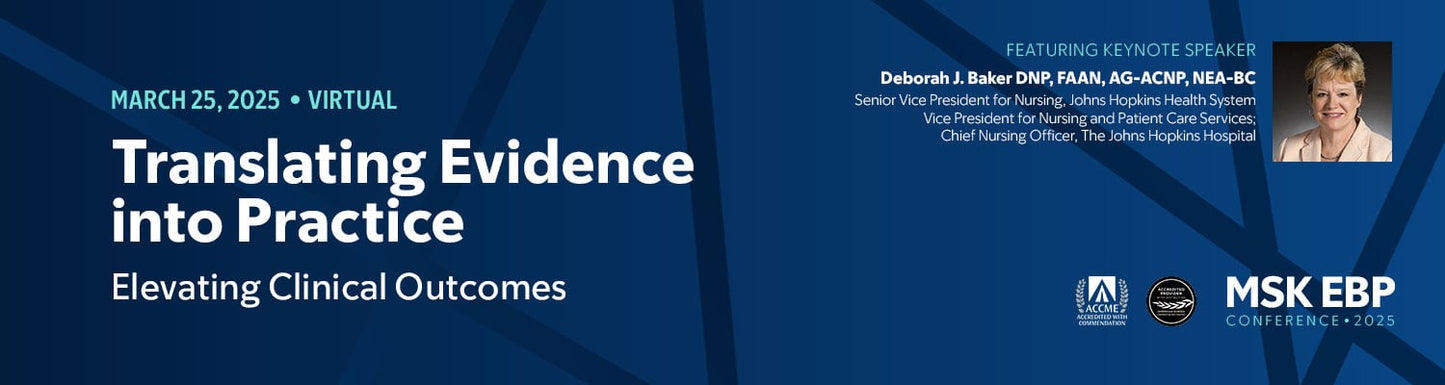
Memorial Sloan Kettering Cancer Center Translating Evidence into Practice 2025
Include: 22 videos + 18 pdfs, size: 4.79 GBTarget Audience: oncologists
Information:
Date & Location: Tuesday, March 25, 2025, 9:00 AM – 5:00 PM, Online
Specialties – Critical Care, General Surgery, Hospitalist, Medical Oncology, Nursing, Oncology and Hematology, Pediatric Oncology, Pharmacology and Medication Management, Surgical Oncology
Specialties – Critical Care, General Surgery, Hospitalist, Medical Oncology, Nursing, Oncology and Hematology, Pediatric Oncology, Pharmacology and Medication Management, Surgical Oncology
Overview
This innovative annual forum, tailored for healthcare professionals across all disciplines, showcases the translation of evidence into practice. This year’s program features over 20 innovative quality improvement projects and practice initiatives. You’ll hear directly from project leads as they share their strategies for successfully driving meaningful change at their institutions. Each presentation will highlight successful examples of utilizing high-quality evidence to achieve impactful improvements in practice and outcomes.
We’re honored to welcome Deborah Baker from Johns Hopkins Health Systems as this year’s keynote speaker, who will deliver an exciting presentation on Developing Nurse Clinician Scientists: Translating Evidence to Improve Practice and Nurse Autonomy.
Podium Presentations will cover five key topic areas, including:
Technology and Innovation
Example Presentation: Staff Dash – A Data-Driven Dashboard to Inform Staffing Decisions
Symptom Management through Supportive and Integrative Therapies
Example Presentation: Implementing a Standardized Writing Form to Monitor Dysgraphia for the Immune Effector Cell-Associated Encephalopathy (ICE) Score
Leadership and Professional Development
Example Presentation: Improving Scheduling Efficiency in the Setting of Staff Turnover and Increased Surgical Volume in the Post-Anesthesia Care Unit Using Census Data Trends
Interprofessional/Interdisciplinary Collaboration
Example Presentation: Criteria Utilization to Optimize Physical Therapy Services in Acute Care Oncology Postoperative Thoracic Populations
Risk Mitigation Strategies in Oncologic Population
Example Presentation: Use of Antiseptic Barrier Caps to Reduce Central Line-Associated Bloodstream Infections in Stem Cell Transplant and Cellular Therapy Patients
Finally, a Rapid-Fire Poster Session will cover a range of topics such as:
— Standardizing the Process for Checking Investigational Oral Medications to Improve Patient Safety in Clinical Trials
— Transdisciplinary Post-CAR-T Therapy Coordination and Education in Non-Oncology Areas
Registered attendees will receive access to an online syllabus after the conference, which will include select PDFs of the faculty presentations (slides) and recorded videos.
This conference is designed for healthcare professionals of all disciplines including nurses, advanced practice providers, physicians, pharmacists, dieticians, social work, physical therapists, occupational therapists, respiratory therapists or any other licensed clinical practitioner interested in learning more about evidence-based healthcare and how to integrate it into their practice.
Objectives
At the conclusion of this program, learners will be able to:
- Identify methods used to gather high-quality evidence in order to make a practice change
- Recognize successful implementation strategies for change management
- Illustrate the importance of demonstrating the return on investment for evidence-based change
- Discuss strategies used to translate research into daily practice
Topics:
- Administration and Monitoring Practices for Drugs at Higher Risk for Infusion Reaction.mp4
Administration and Monitoring Practices for Drugs at Higher Risk for Infusion Reaction.pdf
CAUTI Reduction by Updating Hazardous Urinary Incontinence Management.mp4
CAUTI Reduction by Updating Hazardous Urinary Incontinence Management.pdf
Criteria Utilization to Optimize Physical Therapy Services in Acute Care Oncology Postoperative Thoracic Populations.mp4
Criteria Utilization to Optimize Physical Therapy Services in Acute Care Oncology Postoperative Thoracic Populations.pdf
Dancing the Line- Reducing Toe Out to Toe in Time.mp4
Dancing the Line- Reducing Toe Out to Toe in Time.pdf
Developing Nurse Clinician Scientists- Translating Evidence to Improve Practice and Nurse Autonomy.mp4
Developing Nurse Clinician Scientists- Translating Evidence to Improve Practice and Nurse Autonomy.pdf
Early Palliative Care in Patients Receiving CAR T cells.mp4
Early Palliative Care in Patients Receiving CAR T cells.pdf
EBP2025_Brochure.pdf
Implementing a Standardized Writing Form to Monitor Dysgraphia for the Immune Effector Cell-Associated Encephalopathy (ICE) Score.mp4
Implementing a Standardized Writing Form to Monitor Dysgraphia for the Immune Effector Cell-Associated Encephalopathy (ICE) Score.pdf
Improving Scheduling Efficiency in the Setting of Staff Turnover and Increased Surgical Volume in The PostAnesthesia Care Unit Using Census Data Trends.mp4
Improving Scheduling Efficiency in the Setting of Staff Turnover and Increased Surgical Volume in The PostAnesthesia Care Unit Using Census Data Trends.pdf
Interprofessional Interdisciplinary Collaboration Q&A.mp4
Leadership and Professional Development Q&A.mp4
Mindfulness Breathing in Oncology Nursing.mp4
Mindfulness Breathing in Oncology Nursing.pdf
Nurse Initiated Nutritional Screening and Referral System.mp4
Nurse Initiated Nutritional Screening and Referral System.pdf
Nurse-Led Pre-Procedure Teaching Program to Improve Patient Access.mp4
Nurse-Led Pre-Procedure Teaching Program to Improve Patient Access.pdf
Promoting the Use of Continuous Vital Signs Monitoring (CVSM) Technology for Early Recognition of Clinical Deterioration in Non-ICU Adult Hospitalized Patients.mp4
Promoting the Use of Continuous Vital Signs Monitoring (CVSM) Technology for Early Recognition of Clinical Deterioration in Non-ICU Adult Hospitalized Patients.pdf
Rapid-Fire Poster Session.mp4
Rapid-Fire Poster Session.pdf
Reducing Needlestick Injuries- Updating Our Blood-Collection Set.mp4
Reducing Needlestick Injuries- Updating Our Blood-Collection Set.pdf
Risk Mitigation Strategies in Oncologic Population Q&A.mp4
Staff Dash- A Data-Driven Dashboard to Inform Staffing Decisions.mp4
Staff Dash- A Data-Driven Dashboard to Inform Staffing Decisions.pdf
Symptom Management through Supportive and Integrative Therapies Q&A.mp4
Technology and Innovation Q&A.mp4
Use of Antiseptic Barrier Caps to Reduce Central Line Associated Blood Stream Infections in Stem Cell Transplant and Cellular Therapy Patients.mp4
Use of Antiseptic Barrier Caps to Reduce Central Line Associated Blood Stream Infections in Stem Cell Transplant and Cellular Therapy Patients.pdf
When Nothing Exists- Establishing Consensus for a Dilation Protocol for Underserved Populations.mp4
When Nothing Exists- Establishing Consensus for a Dilation Protocol for Underserved Populations.pdf