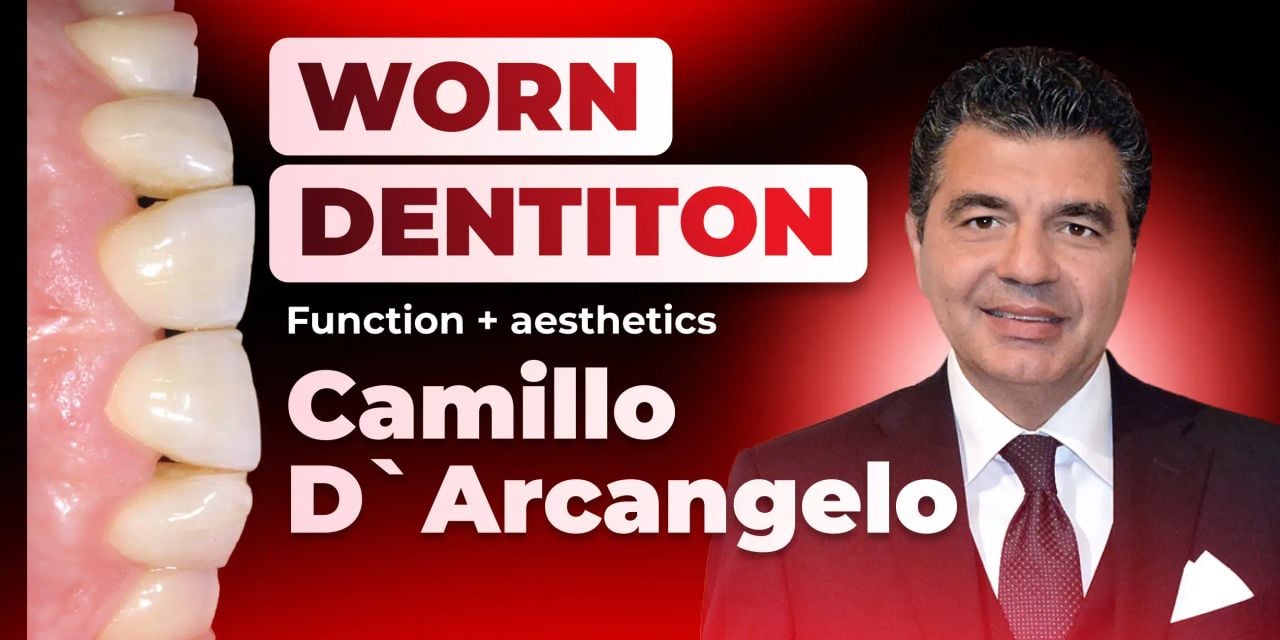
OHI-S Treatment of pathological tooth wear. Additive prosthodontics. The concept Aesthetics-Function-Posture
Couldn't load pickup availability
OHI-S Treatment of pathological tooth wear. Additive prosthodontics. The concept Aesthetics-Function-Posture
-
Share positive thoughts and feedback from your customer.
Author -
Share positive thoughts and feedback from your customer.
Author -
Share positive thoughts and feedback from your customer.
Author
OHI-S Treatment of pathological tooth wear. Additive prosthodontics. The concept Aesthetics-Function-Posture 10 lession 19h36m
+ Include: 10 videos, size: 6.34 GB + Target Audience: prosthodontists and restorative dentists + Information:10 lessons (19h 36min)
- – diagnostics
- – consideration of postural aspects
- – functional treatment
- – final result: aesthetic rehabilitation by indirect restorations.
Overview:
The OHI-S Treatment of Pathological Tooth Wear course provides an intensive 19.5-hour program focused on additive prosthodontics and the comprehensive “Aesthetics-Function-Posture” concept. The curriculum covers advanced, minimally invasive protocols for diagnosing, planning, and restoring worn dentition while optimizing occlusal function and patient posture.
Learning Objectives:
-
Diagnose the etiology and clinical stages of severe pathological tooth wear.
-
Implement the “Aesthetics-Function-Posture” concept into comprehensive restorative treatment planning.
-
Apply minimally invasive additive prosthodontic techniques to restore damaged dentition.
-
Evaluate and re-establish the optimal vertical dimension of occlusion (VDO) for functional stability.
-
Formulate interdisciplinary management strategies to address the relationship between occlusion and overall body posture.
Target Audience:
Best for prosthodontists and restorative dentists who want updates on additive prosthodontics, treating tooth wear, and the function-posture link.
+ Topics:Lesson 1.The concept of additive restoration techniques
- – Esthetic guidelines for restoration
- – Traditional and additive approaches to aesthetic restoration: indications
- – Types of materials for aesthetic restoration and indications for their use
- – Features of the choice of the concept of aesthetic restoration
- – Advantages of the additive concept
- – Tasks of aesthetic treatment
- – Indications for dental restoration with and without preparation
- – Hyper-contouring: the subtleties of planning aesthetic restoration
- – Determining the optimal thickness of the veneer
- – Mock-up in aesthetic restoration
- – The concept of aesthetics of the gingival margin
- – Feldspathic porcelain, composites, lithium disilicate: advantages and disadvantages
- – Aspects of marginal stability
- – The stages of fixing veneers: subtleties and recommendations.
Lesson 2.Minimal invasive preparation for veneers
- – Aesthetics in dentistry: the superiority of a smile
- – Indications for preparation of teeth for various restoration
- – Principles of dental preparation
- – Supragingival line: optimal position for aesthetic restoration
- – Mock-up and Wax-up in the production of aesthetic restoration
- – New minimal preparation technique
- – Stages and the rules of the classic preparation
- – Impressions: materials and recommendations
- – Features of preparation at the level of the gingival margin
- – Ceramics and lithium disilicate: advantages and disadvantages
- – Composites: indications for use
- – Occlusal rehabilitation using lithium disilicate veneers
- – Composite veneers for parafunction
- – Fiberglass pins for aesthetic restoration
- – Adhesive protocol: features of working with enamel
- – Stages of cementation of veneers
- – Teeth bleaching before making veneers.
Lesson 3.Occlusion and occlusal balance of the lateral group of teeth
- – Modern principles of occlusion
- – Materials for the restoration of the occlusal surface: selection criteria
- – Biomechanical aspects of posterior tooth restoration
- – Physiological features of tooth tissues when choosing a material for restoration
- – The concept of occlusal balance: the basic principle
- – Composites for total rehabilitation of posterior teeth
- – Changing occlusion using temporary restoration of the posterior teeth
- – Methods of treatment of dysfunction
- – Additive concept in occlusion recovery
- – Fixed occlusal splints and protective mouthguards: characteristics
- – E. max: types and mechanical features
- – Features of preparation of posterior teeth
- – Stamp technique: principle and advantages
- – Pastoral benefits: clinical examples
- – BioFunction Enamel: mechanical and biomechanical properties.
Lesson 4.Minimal Invasive preparation for Overlay and Onlay
- – The basic principles of preparation
- – Materials for the restoration of the posterior group of teeth: advantages and disadvantages
- – Biomechanical aspects of posterior tooth restoration
- – Composite or ceramic: material selection criteria
- – Indications for direct and indirect restoration
- – Basic rules and principles of preparation of posterior teeth
- – Additive approach in the restoration of posterior teeth
- – Partial preparation: indications and rules for creating a cavity
- – The concept of biologic width
- – Cavity edge relocation: advantages and disadvantages
- – Elimination of undercuts: Build-up concept
- – New in minimal preparation
- – CAD/CAM technologies: features of application in aesthetic restoration
- – Impressions taking: recommendations for getting an accurate impression
- – Laboratory stages of the production of linings
- – Stamp technique: Advantages
- – Cementation: the processing stages of a cavity with the use of different materials
- – Problems of indirect composite restoration
- – Composites for cementing: comparative characteristics.
Lesson 5.Rehabilitation of patients with worn dentition
- – The main causes of tooth abrasion
- – Occlusal balance in restoring function and aesthetics
- – Changing the canine guide using an additive technique
- – Diagnosis of оcclusal disorders: features
- – Asymptomatic occlusal disorders: treatment methods
- – Physiological aspects of the condyle position
- – CBCT and MRI: advantages and disadvantages
- – Stages of treatment of patients with occlusal and aesthetic disorders
- – VDO incrementation: basic rules
- – Removable or non-removable occlusal splints: advantages and disadvantages
- – Range of rotation: the specificity of the parameter
- – Deprogramming of muscles: rehabilitation using an additive technique
- – Features of temporary splinting
- – Materials for the restoration: selection criteria
- – Indications for occlusal veneers
- – Gold-composite crowns on implants.
Lesson 6.Parafunction and worn dentition: methods of treatment
- – What is parafunction?
- – Erasability of teeth: types, causes, methods of treatment
- – Methods of rehabilitation of patients with occlusive disorders
- – The vertical dimension of occlusion: to determine the required height
- – Physiological aspects of mandibular movement
- – Determination of the condyle position: CBCT and MRI
- – Timing of the formation of muscle memory
- – Increasing the height of the bite: an adhesive technique
- – Palatal veneers: manufacturing principles
- – Methods of restoration with preparation of teeth
- – Protective mouthguards: biomechanical aspects of use
- – Treatment of patients with occlusion disorders: a step-by-step protocol
- – Veneers or crowns: biomechanical justification for the choice.
Lesson 7.Aesthetic and occlusal rehabilitation of patients with teeth wear and asymptomatic occlusal disorders
- – Diagnosis: basic principles of diagnosis
- – Stages of diagnosis of asymptomatic patients
- – Palpation of muscles: methods and rules
- – Clinical stages of treatment
- – Photoprotocol in the treatment
- – Diagnosis of disorders by CBCT and MRI: anatomical aspects
- – Physiological and pathological position of the condyle and articular disc
- – Palpation of the TMJ: the traditional method and palpation through the auditory canal
- – Increasing the vertical dimencion without changing the position of the condyle: technique
- – Cancellation of muscle memory: prosthetic aspects
- – The methodology for the fabrication of temporary occlusion splints
- – Rehabilitation of patients with the use of additive prosthetics
- – Occlusal veneers: indications for use.
Lesson 8.Additive prosthetics in the treatment of patients with parafunction: practical tips
- – The concept of additive prosthetics: indications and benefits
- – Restorations with minimal preparation and without preparation: advantages and disadvantages
- – Hyper-contouring: a geometric concept
- – The concept of occlusal balance
- – Determining the point of greatest convexity
- – Palatal veneers: indications
- – Materials for the restoration: selection criteria
- – The method of using occlusal splints in the restoration of teeth in patients with parafunction
- – Gold-composite crowns on implants: indications and subtleties of use
- – Composites and lithium disilicate for the restoration of posterior teeth: indications and benefits.
Lesson 9.Aesthetic and occlusal rehabilitation of patients with musculoskeletal dysfunctions: diagnosis and treatment principles
- – EFP – concept: the main provisions
- – Diagnostics: principles and stages
- – Aesthetic rehabilitation with preservation of occlusal balance: principles
- – Method of bite registration
- – TMJ: anatomical and physiological aspects
- – Patients with symptoms of musculoskeletal dysfunction: criteria for inclusion in the group
- – Clinical stages of treatment
- – Methods of examination of the patient
- – Evaluation of treatment outcomes: diagnostic models and photos
- – Muscle palpation: techniques and features of palpation of individual muscles
- – Palpation of the TMJ through the auditory canal: methods and benefits
- – Postural tests: criteria for evaluating pastura at the treatment stages
- – Method of recording the new position of the lower jaw
- – Treatment of asymptomatic patients and patients with symptoms of musculoskeletal dysfunction: principles and differences.
Lesson 10.Asthetic and occlusal rehabilitation of patients with musculoskeletal dysfunction: clinical examples
- – Diagnosis and treatment planning: key aspects
- – Stages of diagnosis of musculoskeletal disorders
- – Survey methods: objective and reproducible
- – Intraoral examination: rules and recommendations
- – Muscle palpation: demonstration of the technique
- – Pastoral tests: methods of conducting
- – MRI: determination of the condyle position
- – Use of occlusal splints: methods and terms of treatment
- – Additive prosthetics for occlusal rehabilitation
- – Asymmetrically positioned occlusal splints: indications
- – Principles of mandibular displacement: biomechanical aspects.