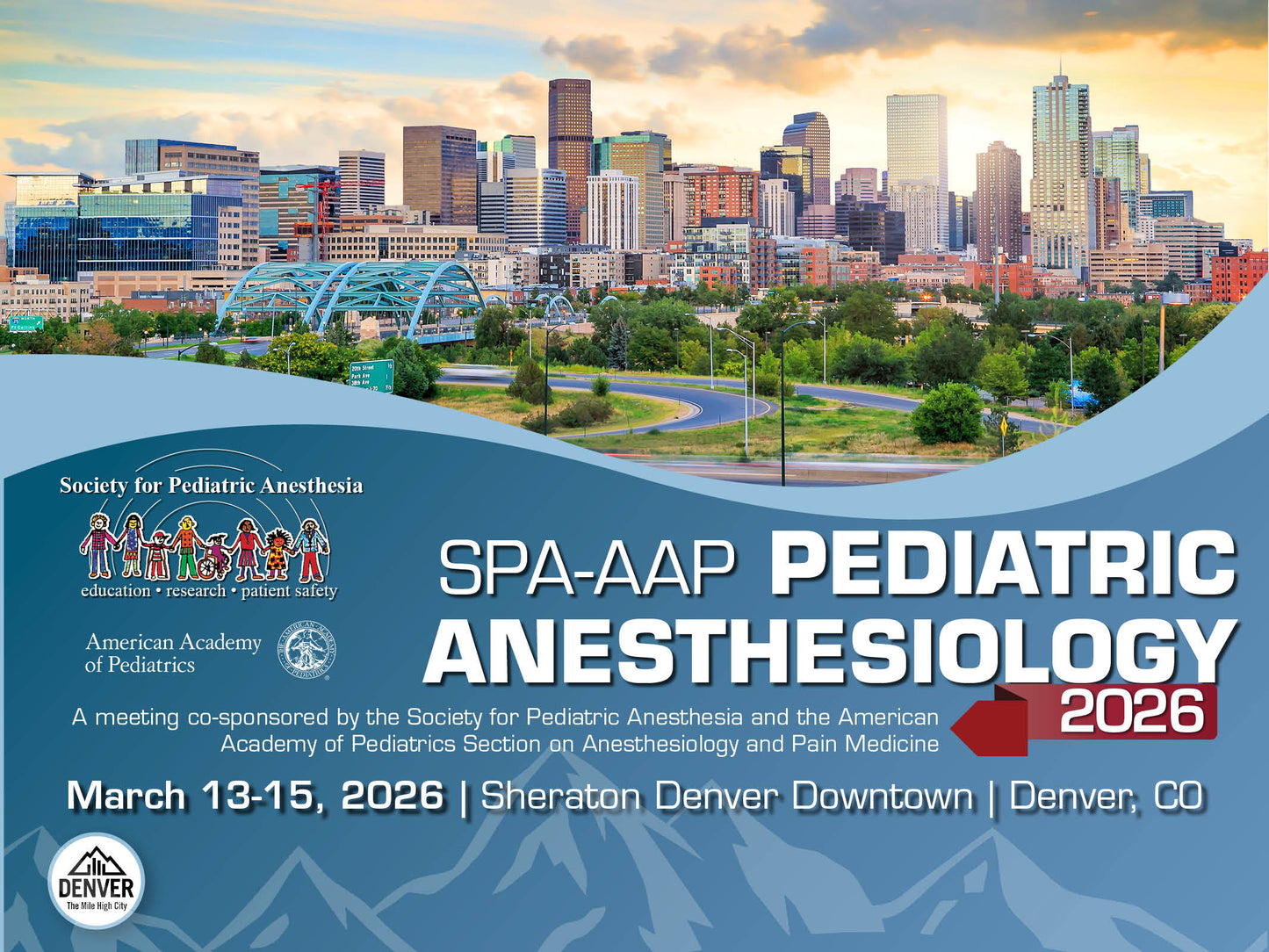
SPA-AAP Pediatric Anesthesiology 2026
SPA-AAP Pediatric Anesthesiology 2026
Couldn't load pickup availability

SPA-AAP Pediatric Anesthesiology 2026
SPA-AAP Pediatric Anesthesiology 2026 (Videos)
Comprehensive Updates in Pediatric Anesthesiology, Regional Anesthesia, Ultrasound-Guided Blocks, Artificial Intelligence, Perioperative Medicine, Pediatric Critical Care, and Patient Safety
Advance your expertise in pediatric perioperative medicine with SPA-AAP Pediatric Anesthesiology 2026, one of the world's premier continuing medical education (CME) conferences dedicated to pediatric anesthesia. Organized by the Society for Pediatric Anesthesia (SPA) in collaboration with the American Academy of Pediatrics (AAP), this comprehensive educational program brings together internationally recognized experts to present the latest scientific discoveries, clinical innovations, and emerging technologies that are transforming the care of infants, children, and adolescents undergoing anesthesia and surgery.
Held March 13–15, 2026, in Denver, Colorado, the conference features an extensive educational curriculum consisting of plenary sessions, expert seminars, highly specialized workshops, round-table discussions (RTDs), and interactive problem-based learning discussions (PBLDs). Participants explore cutting-edge developments in pediatric regional anesthesia, ultrasound-guided nerve blocks, artificial intelligence (AI), perioperative patient safety, neurophysiologic monitoring, pediatric pharmacology, and multidisciplinary perioperative care.
Designed around evidence-based practice and real-world clinical application, the program equips clinicians with practical strategies to improve perioperative outcomes, reduce complications, optimize workflow efficiency, and enhance the safety of pediatric patients across every stage of surgical care.
Product Details
- Course: SPA-AAP Pediatric Anesthesiology 2026
- Provider: Society for Pediatric Anesthesia (SPA) & American Academy of Pediatrics (AAP)
- Conference Dates: March 13–15, 2026
- Location: Denver, Colorado, USA
- Format: Videos
- Language: English
- Educational Level: Advanced
- Learning Format: Plenary Lectures, Workshops, Seminars, Round Table Discussions (RTDs), Problem-Based Learning Discussions (PBLDs)
Course Overview
Pediatric anesthesiology continues to evolve rapidly through advances in regional anesthesia, perioperative ultrasound, artificial intelligence, precision pharmacology, neurophysiologic monitoring, enhanced recovery protocols, and pediatric critical care. Caring for infants and children requires specialized knowledge of developmental physiology, age-specific pharmacology, perioperative safety, and multidisciplinary collaboration.
SPA-AAP Pediatric Anesthesiology 2026 delivers a comprehensive review of the latest evidence and innovations shaping modern pediatric anesthesia practice. International experts discuss contemporary approaches to difficult airway management, regional anesthesia, perioperative medicine, ICU liberation, medication safety, pediatric pain management, and technology-assisted clinical decision-making.
The curriculum emphasizes practical implementation of new evidence while addressing emerging challenges such as AI integration, cognitive workload reduction, medication error prevention, and optimizing long-term outcomes beyond the operating room.
What You'll Learn
After completing this course, participants will be able to:
- Perform advanced ultrasound-guided regional anesthesia using age-appropriate techniques.
- Select optimal ultrasound probes for pediatric nerve block procedures.
- Integrate artificial intelligence into perioperative decision-making and workflow optimization.
- Utilize EEG-based monitoring to optimize anesthetic depth and reduce emergence delirium.
- Improve medication dosing accuracy and minimize pediatric perioperative medication errors.
- Apply current evidence in pediatric anesthesia research to clinical practice.
- Implement ICU liberation principles and perioperative strategies that improve recovery beyond surgery.
- Enhance patient safety through multidisciplinary collaboration and evidence-based perioperative care.
Comprehensive Topics Covered
Pediatric Anesthesia Fundamentals
Strengthen core knowledge in pediatric perioperative medicine.
Topics include:
- Neonatal anesthesia
- Infant anesthesia
- Pediatric physiology
- Developmental pharmacology
- Age-specific anesthetic management
- Perioperative assessment
- Patient safety
Faculty review the physiologic differences that distinguish pediatric anesthesia from adult practice.
Ultrasound-Guided Regional Anesthesia
Master advanced regional anesthesia techniques in children.
Topics include:
- Ultrasound-guided nerve blocks
- Probe selection
- Peripheral nerve blocks
- Truncal blocks
- Fascial plane blocks
- Pediatric anatomy
- Regional anesthesia safety
Participants learn age-specific approaches that improve analgesia while minimizing complications.
Artificial Intelligence in Pediatric Anesthesia
Explore the future of technology-assisted perioperative medicine.
Topics include:
- Artificial Intelligence (AI)
- Clinical decision support
- Machine learning
- Predictive analytics
- Workflow optimization
- Cognitive load reduction
- Smart operating rooms
Faculty discuss current opportunities, practical applications, and limitations of AI in pediatric anesthesiology.
EEG Monitoring & Neurophysiology
Enhance anesthetic depth monitoring to improve neurologic outcomes.
Topics include:
- EEG monitoring
- Brain function monitoring
- Depth of anesthesia
- Emergence delirium
- Neuroprotection
- Pediatric neurophysiology
- Intraoperative monitoring
Pediatric Pharmacology
Review contemporary medication management strategies.
Topics include:
- Pediatric drug dosing
- Weight-based calculations
- Medication safety
- Pharmacokinetics
- Pharmacodynamics
- Drug interactions
- Perioperative pharmacology
Faculty emphasize strategies for preventing medication errors in pediatric patients.
Perioperative Patient Safety
Strengthen evidence-based approaches to improving surgical outcomes.
Topics include:
- Pediatric patient safety
- Quality improvement
- Human factors
- Team communication
- Crisis resource management
- Surgical safety
- Clinical protocols
Pediatric Critical Care & ICU Liberation
Optimize recovery beyond the operating room.
Topics include:
- ICU liberation
- Early mobilization
- Pediatric intensive care
- Ventilator management
- Sedation optimization
- Recovery pathways
- Multidisciplinary care
Participants learn how pediatric anesthesiologists contribute to improved outcomes throughout the continuum of care.
Pediatric Airway & Difficult Airway Management
Develop expertise in advanced pediatric airway management.
Topics include:
- Difficult pediatric airway
- Airway algorithms
- Video laryngoscopy
- Fiberoptic techniques
- Airway emergencies
- Neonatal airway
- Simulation training
Pain Management & Enhanced Recovery
Improve perioperative analgesia and postoperative recovery.
Topics include:
- Multimodal analgesia
- Opioid-sparing anesthesia
- Regional techniques
- Enhanced Recovery After Surgery (ERAS)
- Acute pain management
- Chronic pain prevention
Scientific Advances in Pediatric Anesthesiology
Review the latest clinical research driving innovation.
Topics include:
- Emerging technologies
- Clinical trials
- Translational research
- Precision medicine
- Outcome studies
- Future directions
- Evidence-based anesthesia
Learning Objectives
Upon completion of this educational activity, participants will be able to:
- Differentiate ultrasound probes and techniques for advanced pediatric regional anesthesia.
- Evaluate the opportunities and limitations of AI-driven decision support in pediatric operating rooms.
- Utilize EEG-based monitoring to improve anesthetic depth and reduce emergence delirium.
- Improve medication dosing accuracy and reduce perioperative medication errors.
- Interpret current pediatric anesthesia research and integrate new evidence into clinical practice.
- Optimize postoperative recovery through ICU liberation and multidisciplinary perioperative care.
- Develop technology-supported workflows that improve efficiency, patient safety, and clinical decision-making.
Educational Highlights
- Pediatric Anesthesiology
- Pediatric Regional Anesthesia
- Ultrasound-Guided Nerve Blocks
- Pediatric Ultrasound
- Artificial Intelligence (AI)
- Machine Learning
- EEG Monitoring
- Emergence Delirium
- Pediatric Pharmacology
- Pediatric Airway Management
- Perioperative Medicine
- Pediatric Critical Care
- ICU Liberation
- Pediatric Pain Management
- Enhanced Recovery After Surgery (ERAS)
- Neonatal Anesthesia
- Pediatric Patient Safety
- Clinical Decision Support
- Perioperative Ultrasound
- Continuing Medical Education (CME)
Why This Course Stands Out
SPA-AAP Pediatric Anesthesiology 2026 represents one of the most comprehensive educational experiences in pediatric anesthesia worldwide. Combining internationally recognized faculty, evidence-based clinical updates, advanced procedural workshops, emerging technologies, and multidisciplinary collaboration, the conference provides an exceptional opportunity to master modern pediatric anesthetic practice. Its strong emphasis on artificial intelligence, ultrasound-guided regional anesthesia, medication safety, ICU liberation, and perioperative innovation ensures participants remain at the forefront of pediatric perioperative medicine.
Target Audience
This educational activity is ideal for:
- Pediatric Anesthesiologists
- Pediatric Surgeons
- General Surgeons
- Ophthalmologists
- Dental Anesthesiologists
- Intensivists
- Pediatric Critical Care Specialists
- Neonatologists
- Obstetricians
- Pediatric Cardiologists
- Cardiac Anesthesiologists
- Certified Registered Nurse Anesthetists (CRNAs)
- Nurse Practitioners (NPs)
- Pediatric Residents
- Anesthesiology Residents
- Medical Students
- Advanced Practice Providers (APPs)
Why Choose This Course?
Whether you specialize in pediatric anesthesiology, pediatric surgery, neonatal medicine, pediatric intensive care, pediatric cardiology, ophthalmology, dental anesthesia, or perioperative medicine, SPA-AAP Pediatric Anesthesiology 2026 provides one of the most comprehensive evidence-based updates available. Through expert faculty, interactive workshops, practical case discussions, cutting-edge AI applications, and advanced regional anesthesia techniques, participants gain the knowledge and skills needed to enhance pediatric patient safety and deliver exceptional perioperative care.Topics
The meeting covers a comprehensive and detailed list of topics, organized into specific sessions, workshops, seminars, problem-based learning discussions, and round tables:
Main Plenary Sessions:
-
Session I: Innovation at Altitude – Reaching New Heights in Anesthesia Care
-
Ubiquinone-5: Innovation at the Cellular Level
-
Can the Algorithm Keep Up? Real-Time AI for Pediatric Risk Stratification in the OR
-
Safeguarding Developing Brains: EEG-Guided Anesthesia to Prevent Emergence Delirium in Children
-
When Genes Meet Gas: Preventing Cerebral Injury in Vulnerable Children
-
-
Session II: Whole Child, Whole Team – Human-Centered Strategies in Pediatric Anesthesia
-
Deepening our Impact – ICU Liberation Principles for the Pediatric Anesthesiologist
-
Taking the Guesswork Out of GLP-1 Management: Latest Recommendations and POCUS to the Rescue
-
Silent Signals: The Value of Preoperative Mental Health Screening for Our Patients
-
-
Session III: The Pinnacle of Quality – Elevating Pediatric Anesthesia Standards
-
The Proactive Pre-Op: Using Conversational AI to Optimize Pediatric Patient Safety
-
From Risk to Resilience: Advancing Medication Safety in Pediatric Anesthesia through Technology and AI
-
Pulse of Innovation: Advances in Pediatric Non-Invasive Arterial Pressure Monitoring
-
-
Session IV: AAP Advocacy Session
-
The AAP and its Role in Modern Advocacy for Children
-
-
Session V: SPA-SPPM JOINT SESSION: Precision and Progress: Novel Strategies for Pediatric Pain Relief
-
Innovating Pain Relief: Novel Analgesic Development Based on Genetics of Rare Diseases with Altered Pain Sensitivity
-
Precision at the Start: Advancing Regional Techniques for Our Youngest Patients
-
Transitional Pain Clinics: Where Healing Meets Innovation
-
-
Session VI: Refresh Your Knowledge – Pediatric Anesthesia Updates
-
Low-Flow Anesthesia – Unique Challenges in Pediatric Anesthesia
-
The MAPP to a Better OR: Microaffirmations and the Power of Collaboration
-
Tackling the Diaphragm in Tiny Warriors: Mastering CDH Repair
-
Sweet and Steady: Navigating Glycemic Control in the Perioperative Period
-
-
Session VII: KEYNOTE
-
Keynote Address – Fireside Chat with Dr. Jerome Adams
-
-
Session VIII: AAP Ask the Experts
-
Addressing Vaccine Hesitancy and Anti-Vaccine Sentiment in Pediatric Patients
-
Don’t Miss Your Shot: Perioperative Vaccination as a Teachable Moment
-
-
Session IX: Poster Presentations and Awards
-
Lightning Abstracts
-
Poster Award/Oral Presentations
-
Moderated Posters
-
-
Session X: From the Editors – Notable Papers from the Past Year
-
Anesthesiology
-
A & A
-
Pediatric Anesthesia
-
-
Session XI: Refresh Your Knowledge – Pediatric Anesthesia Updates
-
From Chest Compressions to Cutting-Edge: The New Era of Resuscitation
-
Thin Air, Real Risks: Air Embolism, Pneumothorax, and Rare Pediatric Anesthesia Emergencies
-
Pediatric Vascular Access: Sizing, Strategies, and Smart Techniques
-
ASA Lecture: How Do We Get Paid? The Economics of Anesthesiology
-
-
Session XII: Update from the SPA Grant Recipients
-
Updates from SPA Young Investigator Research Grant Recipient
-
Updates from SPA MDMP Grant Recipient
-
-
Session XIII: Beyond the Mountain – Advocacy in Action in Pediatric Anesthesia
-
Global Reach, Local Impact: Reimagining Resourcefulness in Pediatric Anesthesia
-
When the Caregiver Hurts: Second Victim Syndrome
-
Silent Risks: Advocacy for Safety and Standards in Pediatric Dental Anesthesia
-
-
Session XIV: The Collaborative Climb – Elevating Collaboration to Elevate Care
-
High Reliability in High Stakes: Building Pediatric OR Teams that Rise to the Occasion
-
Beyond the OR Doors: Who Is Sedating and How Do We Keep It Safe?
-
No One Climbs Alone: Creating Inclusive Cultures in Pediatric Anesthesia
-
-
Session XV: Rocky Mountain High, Carbon Footprint Low – Greening Pediatric Anesthesia Today for a Sustainable Tomorrow
-
Small Changes, Big Impact: Applying Behavioral Insights to Anesthesia Sustainability
-
Why, How, and Do it Now: Deactivating the Central Nitrous Oxide Pipeline
-
TIVA for All: Practical Strategies to Make TIVA Your Green Default
-
Advanced Practice Provider (APP) Symposium Topics:
-
Considerations for Post-Operative Pain Management in Pediatric Patients with Osteogenesis Imperfecta
-
Anesthesia Considerations for Craniotomy for a Large MCA Aneurysm at the M1-M2 Junction in the Newborn: DOL 0
-
Anesthesia Beyond Borders: CRNAs Impact on Medical Missions
-
Anesthesia for Lymphatics
Seminars:
-
SEMINAR 1: TIVA for Tots, North America
-
SEMINAR 2: Wake Up Safe – A Practical Approach to Quality Improvement and Performance Management
-
SEMINAR 3: It’s Coming, Are YOU Ready? Mass Casualty Preparedness for the Busy Pediatric Anesthesiologist
-
SEMINAR 4: Green Makes Cents – Financial Wins from Environmental Innovation in Healthcare
-
SEMINAR 5: Going with the Flow – Intraoperative Care for the ECMO Patient
-
SEMINAR 6: Wake Up Safe – Advanced Quality Improvement, Safety and Performance Management
-
SEMINAR 7: The Art of Inhaled Inductions – Crowdsourcing Stylistic Micro-Decisions and Evaluating Their Evidence
-
SEMINAR 8: Empowering Educators – Facilitator Training for SPA’s Novel Web-Based Well-Being Curriculum – No Experience Necessary!!
Workshops:
-
Pediatric Advanced Ultrasound Guided Regional Anesthesia
-
SPPM/SPA WORKSHOP: Exploring the Newest Techniques in Pediatric Regional Anesthesia
-
SPPM/SPA WORKSHOP: Integrating Acupuncture in Pediatric Perioperative Care and Pain Medicine
-
SPPM/SPA WORKSHOP: We’ve Got Your Back – Hands-On Ultrasound Skills for Neuraxial Procedures and a Guide to Create Your Own Phantom
-
Advanced Techniques for Peripheral Vascular Access
-
Comprehensive Pediatric Point-of-Care (POCUS)
-
Difficult Airway
-
One Lung Ventilation in Pediatric Patients
-
Pediatric Gastric POCUS Workshop
-
Ultrasound-Guided Caudal Block, Single Injections, and with Catheter Advanced Cephalad at the Lumbar or Thoracic Spine Level
-
Mastering and Teaching Pediatric Spinal Anesthesia: From First Stick to Program Launch