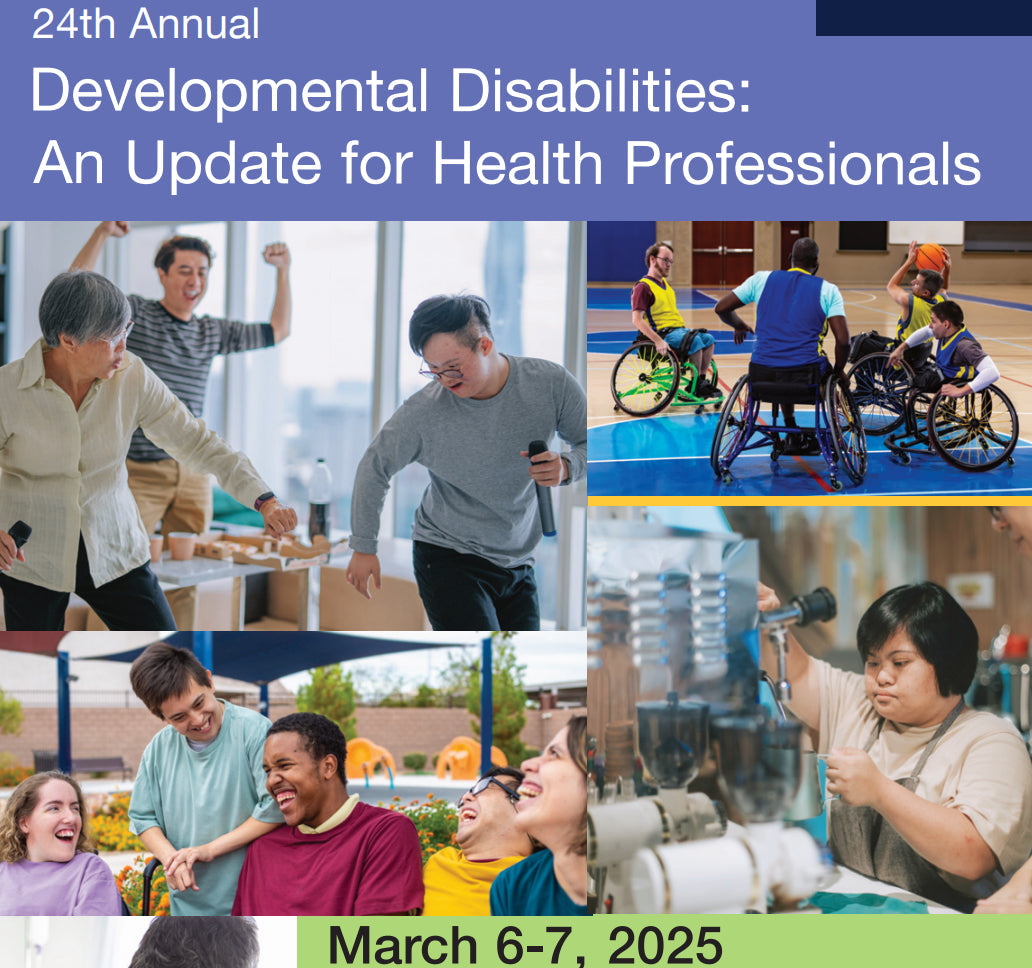
UCSF 24th Annual Developmental Disabilities 2025
Include: 4 videos + 23 pdfs, size: 8.54 GBTarget Audience: healthcare professionals, educators, and advocates supporting individuals with developmental disabilities across the lifespan
Information:
March 6 – 7, 2025
This unique interdisciplinary conference is created for providers who care for children, youth, and adults with developmental disabilities and complex health care needs. Whether you have never attended a conference on this topic, or make a point to attend every year, we welcome you and look forward to learning together. This year’s theme is From Recovery to Reinvention: Building for the Next Generation. You’ll hear from leaders in the field, community activists, self-advocates, and distinguished clinical experts. The activity will address ways to improve the quality of care provided to patients from a perspective that will benefit all members of the care team – from the physician or nurse practitioner to the social worker or case manager.
Featured topics this year include systems change, health equity, health care transitions, supported decision-making, evidence-based approaches to autism intervention, fetal alcohol spectrum disorders, medication shortages, assisted communication, siblings of children and adults with developmental disabilities, suicide prevention and so much more. While the conference is designed and accredited for healthcare professionals, we welcome families and individuals with developmental disabilities to also attend.
The virtual conference format will provide access to learners across the country and will offer opportunities for interaction and networking. Live lectures will be recorded and available for replay on demand after the conference, so you don’t miss a moment.
This activity is developed by a community planning and advisory committee made up of self-advocates and representatives from the following agencies: UCSF, Stanford University, The Arc San Francisco, Golden Gate Regional Center, East Bay Regional Center, State Council on Developmental Disabilities, Support for Families, WITH Foundation, San Francisco Department of Public Health, and the California Department of Developmental Services.
Learning Objectives
We specifically anticipate improvements in skills and strategies to:
- Improve systems of care for people with disabilities by considering social and cultural diversity and disparities, structural bias, and implications for access to quality healthcare;
- Improve interprofessional teamwork and community collaboration to effectively address gaps in care for people with developmental disabilities;
- Describe regional and state organizations and current policies relevant to access to health and related services;
- List key tasks to assure effective health care transition from youth to adulthood, including mitigating the impact of aging out of public programs, and supporting self-determination and self-advocacy;
- Review the range of novel and evidence-based approaches to the care of patients with autism, developmental disabilities and Fetal Alcohol Spectrum Disorders;
- Describe what experience and research holds for the future of communication therapy in neurodiverse populations;
- Review ways to prevent suicide in youth and adults with autism and other developmental disabilities, and provide trauma informed care in settings where potentially scary and painful procedures might be considered;
- Explain the variety of factors that contribute to the recurrent medication shortages, i.e., stimulants for people with ADHD, and list potential steps to inform, anticipate, prevent and resolve shortages;
- Adopt practical skills to discuss participation in adaptive and parasports with children, youth and adults with disabilities and their parents/caregivers, and support the wellbeing of siblings of children, youth and adults with disabilities;
- Discuss the potential risks and benefits of using generative AI in the care of people with intellectual and/or developmental disabilities.
Topics:
- 01 An Update from the National Council on Disability.pdf
02 Recovering from the Pandemic, Moving Forward.pdf
03 CalHHS and DDS – Master Plan for Developmental Services.pdf
04 Generation Patient Navigating Transitions.pdf
05 Serving Tribal Communities Improving Service Access and Equity.pdf
06 Fetal Alcohol Spectrum Disorders.pdf
07 New Reports Address Barriers, Inequities, and Policy Options for Youth and Young Adults.pdf
08 AASPIRE Autism Community Intervention for Suicide Prevention.pdf
09 Supported Decision-Making in Healthcare.pdf
10 Autism Communication Center College Bound Academy.pdf
11 A Collaborative Approach- Enhancing the Health of Adults with Disabilities in Community Fitness Facilities.pdf
12 Autism Screams in the ED- De-escalation of the Agitated Patient using the Least Restrictive Approach.pdf
13 Spectrum of Approaches to Autism Intervention.pdf
14 Medication Shortages for ADHD and Other Conditions.pdf
15 Adaptive Para Sports for Children and Adolescents with Physical and Developmental Disabilities.pdf
16 Understanding The Diagnostic Label Autism.pdf
17 Supporting Immigrant Children with Special Health Care Needs.pdf
18 Sibling Support- A Catalyst for Family Empowerment.pdf
19 Neuromodulation, Pharmacogenetics, and Imaging- Biological Approaches to Tailoring Therapy.pdf
20 Generative AI- Risks and Benefits for People with Intellectual and or Developmental Disabilities.pdf
Introduction.pdf
March 6 AM Recording.mp4
March 6 PM Recording.mp4
March 7 AM Recording.mp4
March 7 PM Recording.mp4
Program.pdf
Syllabus.pdf