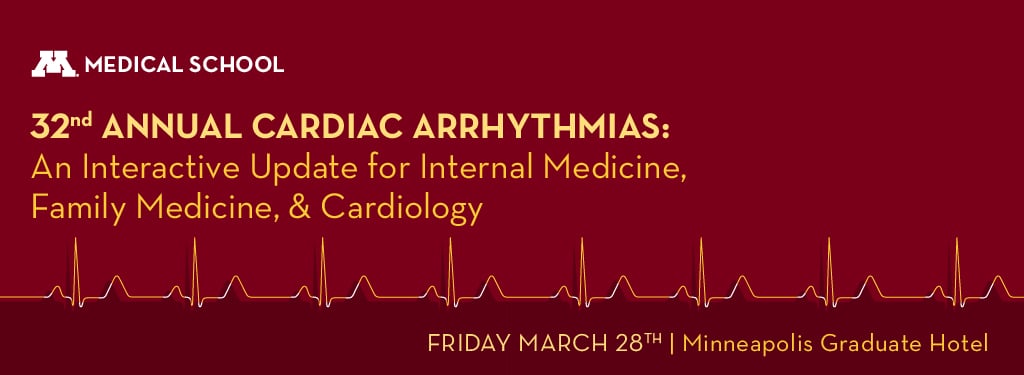
University of Minnesota 32nd Annual Cardiac Arrhythmias Conference 2025
University of Minnesota 32nd Annual Cardiac Arrhythmias Conference 2025
Couldn't load pickup availability

University of Minnesota 32nd Annual Cardiac Arrhythmias Conference 2025
University of Minnesota 32nd Annual Cardiac Arrhythmias Conference 2025
+ Include: 17 Videos (.mp4) + 17 Audios (.mp3) + 17 Subtitles (.vtt) + 16 PDFs, size: 4.33 GB + Target Audience: cardiologists and electrophysiologists + Information:1. Overview
The University of Minnesota 32nd Annual Cardiac Arrhythmias Conference 2025 provides a comprehensive clinical update on the diagnosis and management of complex heart rhythm disorders. The program explores innovations in device therapies, rate versus rhythm control strategies in atrial fibrillation, electrophysiology in sports medicine, and the integration of cardiovascular genetics for arrhythmogenic cardiomyopathies.
Course Date: Fri, Mar 28 2025
32nd Annual Cardiac Arrhythmias Conference
An Interactive Update for Internal Medicine, Family Medicine, & Cardiogy
To help healthcare professionals in recognizing, evaluating and treating common heart rhythm problems .Experts in Cardiology and Cardiac Electrophysiology will offer lectures and panel led question and answer sessions, along with interactive case studies.2. Learning Objectives
-
Evaluate complex arrhythmias and wide QRS complex tachycardias using advanced diagnostic techniques and case-based clinical strategies.
-
Assess the role of advanced imaging, cardiovascular genetics, and electrophysiology in diagnosing and managing arrhythmogenic cardiomyopathies and complete heart block.
-
Implement current evidence-based protocols for anticoagulation and rate versus rhythm control in patients with new-onset and post-operative atrial fibrillation.
-
Utilize data from implantable cardiac devices to optimize patient care and determine appropriate candidates for physiologic pacing and novel device therapies.
-
Apply electrophysiological principles to clinical decision-making regarding PVC intervention, bradycardia evaluation, and heart failure management.
3. Target Audience
Best for cardiologists and electrophysiologists who want updates on arrhythmia management, device therapies, and cardiovascular genetics.4. Topics
-
01 The Role of Electrophysiology in Sports Medicine
-
02 The Role of Advanced Imaging for Complete Heart Block
-
03 Post Operative Atrial Fibrillation – Patient’s Should NOT Receive Anticoagulation
-
04 The Role of Anticoagulation in New Onset Post-Cardiac Surgery Atrial Fibrillation (When to Initiate Anticoagulation)
-
05 My Patient is Having a Lot of PVCs – When to Intervene
-
06 Bradycardia – Physiological vs. Pathological – What Would the EP Do
-
07 Wide QRS Complex Tachycardia
-
08 The Role of Electrophysiology in Heart Failure Management
-
09 Managing Complex Arrhythmias – Case Studies Round 2
-
10 Arrhythmogenic Cardiomyopathy – Diagnostic Evolution and CV Genetics
-
11 Managing Complex Arrhythmias – Case Studies Round 1
-
12 Innovations in Device Therapies
-
13 Maximizing Data from Implantable Cardiac Devices for Clinical Care
-
14 Should All Patients Get Physiologic Pacing for De Novo Device Implants
-
15 Do Energy Source Matter for Atrial Fibrillation Ablation
-
16 Rate vs. Rhythm Control Debate – Argument for Rate Control Approach in AF
-
17 Rate vs. Rhythm Control Debate – Argument for Rhythm Control Approach in AF